
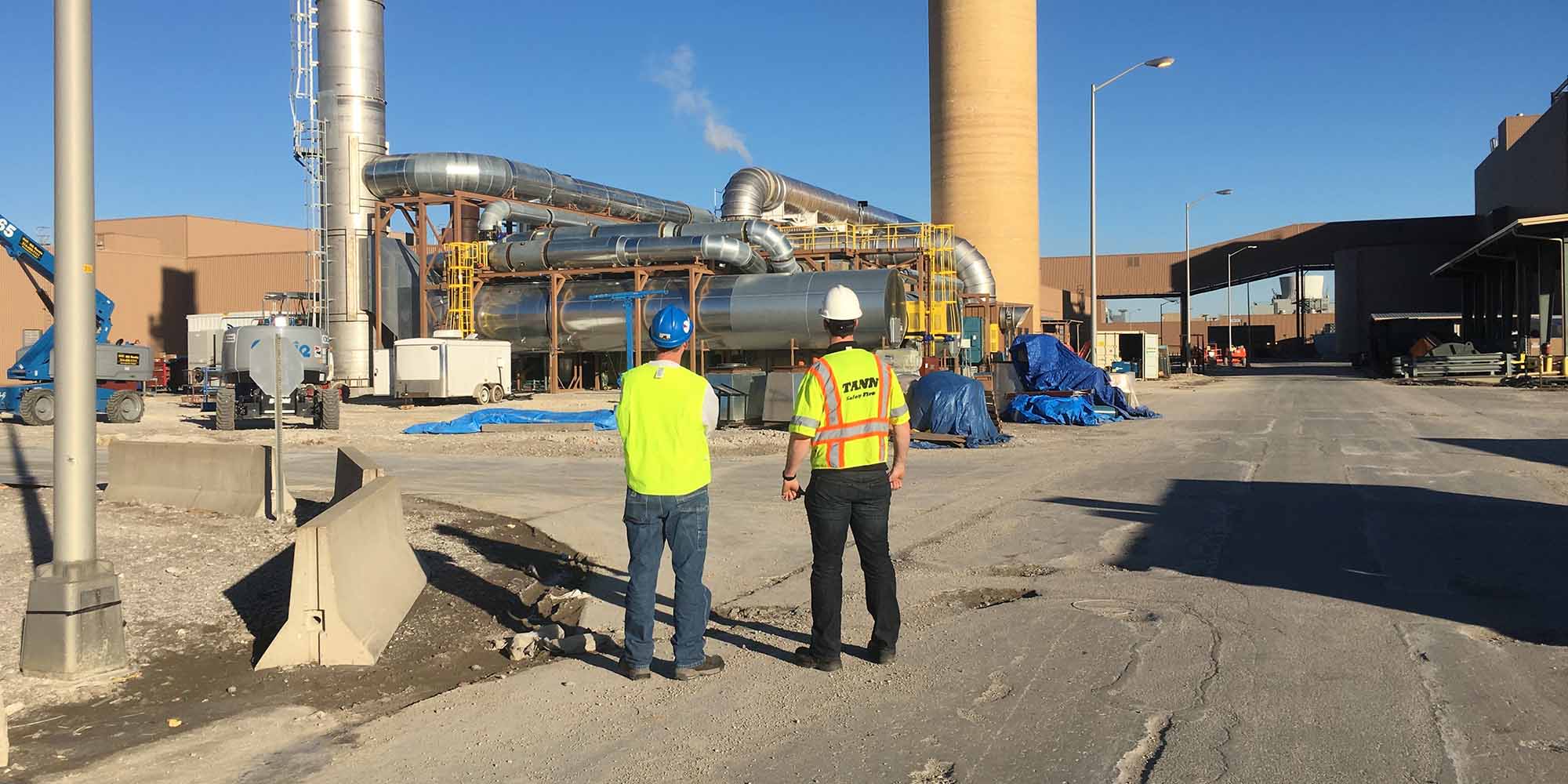
Thermal oxidizer technology has become essential equipment for manufacturers that must destroy volatile organic compounds (VOCs) and hazardous air pollutants (HAPs) before releasing exhaust to the atmosphere. These systems use high-temperature combustion to convert harmful emissions into carbon dioxide and water vapor, helping facilities meet air quality permits and protect surrounding communities. Selecting the right thermal oxidizer directly affects compliance success, operating costs, and long-term equipment reliability.
Four main thermal oxidizer types serve industrial applications today. Each design balances capital cost, fuel efficiency, and destruction performance differently. Understanding these differences helps plant engineers and EHS managers match technology to their specific emission profiles and operational requirements.
What Is a Thermal Oxidizer and How Does It Work
A thermal oxidizer destroys organic pollutants through controlled combustion at elevated temperatures. The process relies on three fundamental principles: time, temperature, and turbulence. Exhaust gases must reach sufficient temperature, remain at that temperature long enough for complete oxidation, and mix thoroughly with oxygen to ensure all pollutant molecules contact the flame or heated surfaces.
Most thermal oxidizers operate at temperatures between 1,400°F and 1,800°F. At these levels, VOC molecules break apart and recombine with oxygen to form carbon dioxide and water vapor. The specific temperature required depends on the compounds being treated, as different chemicals have different ignition points.
Every thermal oxidizer includes several core components. A combustion chamber provides the high-temperature environment where oxidation occurs. Burners supply heat, typically through natural gas or propane combustion. Heat exchangers recover thermal energy to reduce fuel consumption. Control systems monitor temperatures, manage burner operation, and ensure safe performance throughout the process cycle.
Destruction removal efficiency (DRE) measures how effectively a thermal oxidizer eliminates pollutants. Permit requirements typically specify DRE levels between 95% and 99%, depending on the pollutants and local regulations. Achieving these targets consistently requires proper system design, correct operating parameters, and ongoing maintenance.
Four Types of Thermal Oxidizer Technology
Thermal oxidizers fall into four main categories based on their heat recovery method and combustion approach. Regenerative systems use ceramic media to capture and return heat. Catalytic systems employ metal catalysts to enable oxidation at lower temperatures. Recuperative systems transfer heat through metal exchangers. Direct-fired systems operate without heat recovery.
Each technology offers distinct advantages for specific applications. Airflow volume, VOC concentration, operating schedule, and available utilities all influence which design performs best. A system that excels for continuous high-volume operation may prove inefficient for intermittent batch processes, and vice versa.
The selection process should consider both initial equipment cost and long-term operating expenses. Systems with lower capital costs often consume more fuel, while higher-efficiency designs recover that investment through reduced utility bills over their 20-30 year operational lifespan.
Regenerative Thermal Oxidizers
Regenerative thermal oxidizers (RTOs) dominate industrial VOC control applications because they combine high destruction efficiency with exceptional fuel economy. These systems use ceramic media beds to store heat from outgoing clean air and transfer it to incoming contaminated exhaust. RTOs achieve thermal energy recovery rates up to 97%, dramatically reducing the fuel required to maintain oxidation temperatures.
The regenerative process works through alternating flow cycles. Process exhaust enters one ceramic bed and absorbs stored heat as it rises toward the combustion chamber. After oxidation at approximately 1,500°F, the clean air exits through a second ceramic bed, depositing its heat into the ceramic material. Valves periodically switch flow direction, allowing each bed to alternate between heating incoming air and capturing heat from outgoing air.
Standard RTO systems handle airflows from 5,000 to 80,000 SCFM, with destruction efficiencies exceeding 99% when properly designed and maintained. The ceramic media beds typically reach depths of 5-8 feet, providing sufficient heat transfer surface for high thermal efficiency. Facilities operating RTOs with good maintenance programs routinely achieve 99%+ uptime over equipment lifespans of 20-30 years.
RTOs work best for applications with high exhaust volumes and low to moderate VOC concentrations. Paint finishing operations, printing facilities, and coating processes commonly use regenerative systems. The technology handles varying loads well, maintaining efficiency even when production rates fluctuate.
Catalytic Thermal Oxidizers
Catalytic oxidizers use precious metal or base metal catalysts to promote oxidation at temperatures significantly lower than thermal systems require. Operating temperatures typically range from 500°F to 700°F, compared to 1,500°F or higher for thermal oxidizers. This temperature reduction translates directly into fuel savings, making catalytic systems attractive for applications with compatible exhaust streams.
The catalyst bed contains materials such as platinum, palladium, or metal oxide compounds arranged on a substrate that maximizes surface area. As contaminated air passes through the heated catalyst, chemical reactions accelerate at the catalyst surface, breaking down VOC molecules into carbon dioxide and water. The process achieves destruction efficiencies of 95% to 99% for most applications.
Catalytic systems do carry important limitations. Certain compounds poison or mask catalysts, reducing their effectiveness over time. Silicones, phosphates, heavy metals, and sulfur compounds all damage catalyst materials. Particulate matter can coat catalyst surfaces and restrict airflow. Applications considering catalytic oxidizers must carefully analyze their exhaust stream composition to ensure compatibility.
When exhaust streams remain clean and free of catalyst poisons, catalytic oxidizers deliver reliable performance with lower operating costs than direct-fired alternatives. Catalyst replacement becomes necessary every several years, adding a maintenance cost that thermal systems avoid.
Recuperative Thermal Oxidizers
Recuperative thermal oxidizers use metal heat exchangers to preheat incoming exhaust using energy from outgoing clean air. Shell-and-tube or plate-type heat exchangers transfer heat through conduction, warming contaminated air before it enters the combustion chamber. Thermal recovery rates typically reach 50% to 70%, lower than regenerative systems but sufficient for many applications.
The metal construction of recuperative heat exchangers provides an important advantage for certain exhaust streams. These systems tolerate particulate matter better than ceramic media beds, making them suitable for processes that generate dust or solid particles along with VOC emissions. The smooth metal surfaces resist fouling and clean more easily than porous ceramic materials.
Recuperative systems occupy a middle ground in capital and operating costs. They cost more to operate than RTOs due to lower heat recovery, but their simpler mechanical design reduces initial investment and maintenance complexity. Facilities with moderate exhaust volumes and some particulate loading often find recuperative oxidizers provide the best balance.
Applications with higher VOC concentrations may find recuperative systems economically attractive. The heat released during VOC combustion supplements the burner, reducing net fuel consumption. At sufficiently high concentrations, this self-heating effect can approach or achieve self-sustaining operation.
Direct-Fired Thermal Oxidizers
Direct-fired thermal oxidizers represent the simplest and least expensive approach to VOC destruction. These systems direct contaminated exhaust into a refractory-lined combustion chamber where burners maintain oxidation temperatures. Without heat recovery, direct-fired units consume substantially more fuel than other technologies, but their low capital cost suits specific applications.
The straightforward design offers high reliability with minimal mechanical complexity. No ceramic media beds require inspection or replacement. No catalyst materials risk poisoning or degradation. No complex valve systems demand maintenance. For facilities that prioritize simplicity and low initial investment, direct-fired oxidizers deliver straightforward performance.
These systems make economic sense for applications with high VOC concentrations or limited annual operating hours. When exhaust contains enough organic material to sustain combustion with minimal supplemental fuel, the absence of heat recovery matters less. Similarly, equipment that runs only a few hundred hours per year may never recover the higher capital cost of more efficient alternatives.
Batch processes and intermittent operations sometimes favor direct-fired designs. The rapid heat-up and cool-down cycles that would stress recuperative heat exchangers pose no problem for simple refractory chambers. Applications requiring frequent startups and shutdowns may find direct-fired units more practical despite their higher per-hour fuel consumption.
How to Choose the Right Thermal Oxidizer
Selecting the optimal thermal oxidizer requires analyzing several interconnected factors. Exhaust volume, VOC concentration, operating hours, and available utilities all influence which technology delivers the best long-term value. Focusing solely on purchase price often leads to higher total cost of ownership when operating expenses accumulate over decades of service.
Airflow volume and VOC concentration together determine the heat balance of any oxidizer system. Higher concentrations provide more combustion heat, reducing supplemental fuel requirements. Lower concentrations demand more burner input, making thermal efficiency critical for cost control. RTOs excel at low-concentration, high-volume applications precisely because their 97% heat recovery minimizes the fuel penalty.
Operating schedule affects both equipment selection and economic analysis. Continuous operations maximize the value of high-efficiency systems, spreading capital costs across more production hours. Intermittent processes may never accumulate enough operating hours to justify premium equipment, even when that equipment offers superior fuel economy.
Total cost of ownership analysis should span the expected 20-30 year equipment lifespan. Initial purchase price represents only a fraction of lifetime costs for most industrial oxidizers. Fuel consumption, electricity usage, maintenance labor, spare parts, and eventual major repairs all contribute to actual ownership cost. A thorough analysis often reveals that higher-capital systems deliver lower total costs through operational savings.
Space constraints, utility availability, and site-specific factors also influence selection. RTOs require significant footprint and structural support for their ceramic media beds. Catalytic systems need clean, poison-free exhaust streams. Recuperative units offer compact installations but consume more fuel. Understanding your facility’s limitations helps narrow options before detailed engineering begins.
Thermal Oxidizer Applications Across Industries
Thermal oxidizers serve manufacturers across diverse industries, each with unique emission profiles and compliance requirements. Automotive paint shops, chemical processors, pharmaceutical manufacturers, printing operations, and food production facilities all rely on thermal oxidation for air quality compliance.
Automotive and general industrial painting operations generate large exhaust volumes containing solvent vapors from coatings, primers, and cleaning agents. RTOs dominate these applications, handling 50,000 SCFM or more from multiple paint booths while maintaining destruction efficiencies above 99%. The continuous operation of assembly plant paint lines justifies the capital investment in regenerative technology.
Chemical processing facilities face varied emission challenges depending on their products and processes. Reactor vents, storage tank emissions, and process fugitives may require treatment. The specific compounds involved determine whether thermal, catalytic, or recuperative systems best fit each situation. Halogenated compounds and other challenging chemistries demand careful material selection and system design.
Pharmaceutical manufacturing requires exceptionally high destruction efficiencies for active pharmaceutical ingredients and solvents. Some facilities specify 99.9% or higher DRE to address potent compounds. Three-chamber RTOs and specialized system designs meet these stringent requirements while maintaining the reliability production schedules demand.
Printing and packaging operations produce solvent emissions from inks, coatings, and adhesives. Web offset printing, flexographic printing, and laminating processes all generate treatable exhaust. RTOs handle these applications efficiently, often with heat recovery systems that return energy to dryers and ovens in the production line.
Final Thoughts
Thermal oxidizer technology provides proven solutions for manufacturers facing air quality compliance challenges. The right system selection balances destruction efficiency, operating cost, and long-term reliability to deliver decades of dependable performance. Understanding how regenerative, catalytic, recuperative, and direct-fired systems differ enables informed decisions that serve both regulatory and business objectives.
Facilities investing in thermal oxidizers should evaluate total cost of ownership across the equipment’s full lifespan rather than focusing narrowly on purchase price. The most efficient systems often deliver the lowest overall costs despite higher initial investment. Working with experienced manufacturers ensures proper sizing, design, and installation for reliable compliance from day one.
TANN Corporation’s engineers have been designing regenerative thermal oxidizer systems for 40+ years, serving manufacturers across every industry with VOC compliance requirements. Our engineering team evaluates each application individually, recommending system configurations optimized for specific exhaust characteristics and compliance obligations. From initial assessment through installation and decades of ongoing support, we deliver complete emission control solutions. Contact us today for a free quote or to learn more.