
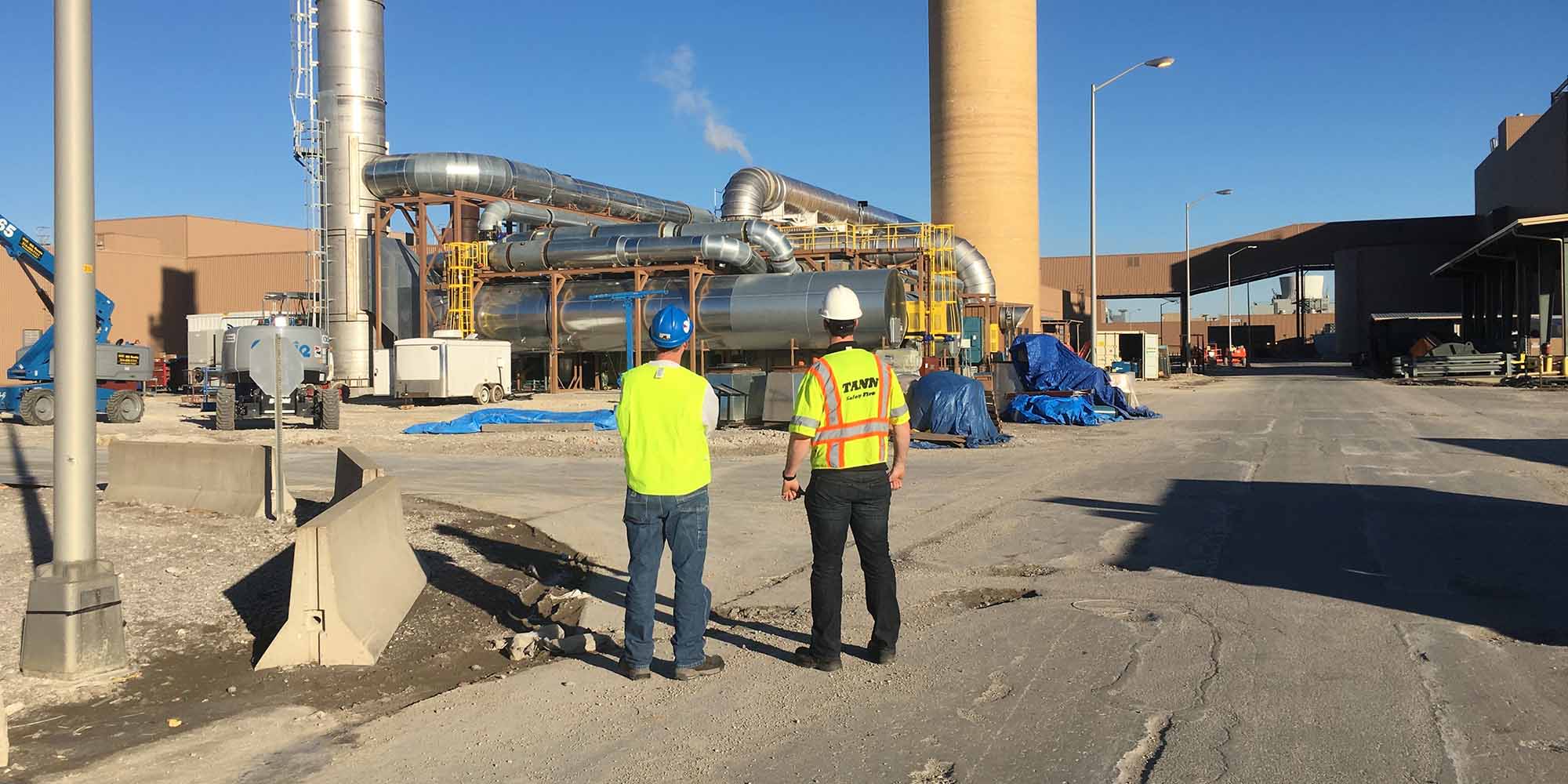
VOC abatement has become a critical priority for manufacturers facing stricter air quality regulations and increased scrutiny from regulatory agencies. Volatile organic compounds released during industrial processes contribute to smog formation, pose health risks to workers and nearby communities, and trigger permit violations that carry significant penalties. Implementing effective abatement technology protects both compliance status and corporate reputation while enabling continued production operations.
Manufacturing facilities across industries generate VOC emissions from painting, coating, printing, chemical processing, and dozens of other operations. Each source requires evaluation to determine the most effective control approach. Understanding available technologies and their applications helps plant engineers and EHS managers select solutions that deliver reliable performance at reasonable cost.
What Is VOC Abatement and Why Does It Matter
VOC abatement refers to the reduction or elimination of volatile organic compounds from industrial exhaust streams before release to the atmosphere. These carbon-based chemicals evaporate readily at room temperature and react with nitrogen oxides in sunlight to form ground-level ozone. Uncontrolled VOC emissions create air quality problems that affect public health and trigger regulatory enforcement actions.
The Clean Air Act establishes the federal framework for VOC control, with the EPA setting standards that states must meet or exceed. Many states have adopted more stringent requirements, particularly in areas struggling to meet ozone attainment standards. California, Texas, and states in the Northeast corridor maintain especially rigorous VOC limits that challenge manufacturers to achieve high destruction efficiencies.
Permit conditions specify allowable emission rates based on facility size, process type, and local air quality conditions. Exceeding these limits triggers violations that can result in fines, mandatory shutdowns, and requirements for additional controls. Facilities that invest in proper abatement technology avoid these consequences while demonstrating environmental responsibility to customers, neighbors, and regulators.
Beyond regulatory compliance, effective VOC abatement protects worker health and community relations. Many volatile compounds cause respiratory irritation, headaches, and long-term health effects at elevated exposure levels. Controlling emissions at the source prevents these compounds from reaching workers inside the facility and residents in surrounding areas.
Common Sources of Industrial VOC Emissions
Manufacturing operations generate VOC emissions from numerous sources, each presenting unique control challenges. Paint and coating applications release solvents as finishes dry and cure. Printing processes emit inks and cleaning solvents. Chemical manufacturing produces process emissions and fugitive releases. Identifying all emission sources provides the foundation for effective abatement planning.
Surface coating operations represent one of the largest industrial VOC sources. Automotive assembly plants, furniture manufacturers, metal fabricators, and aerospace facilities all apply solvent-based coatings that release significant VOC quantities. Spray booths, flash-off zones, and curing ovens each contribute to total facility emissions. Capturing exhaust from these areas and routing it to destruction equipment forms the basis of most coating facility abatement programs.
Printing and packaging operations generate emissions from inks, coatings, adhesives, and cleaning solvents. Web offset printing, flexographic printing, gravure printing, and laminating processes all use volatile materials that require control. The high-speed, continuous nature of printing operations creates large exhaust volumes that benefit from regenerative thermal oxidizer technology.
Chemical and pharmaceutical manufacturing produces emissions from reactors, distillation columns, storage tanks, and material handling operations. The specific compounds involved vary widely depending on products and processes. Some facilities handle halogenated solvents or other challenging chemistries that require specialized abatement equipment designed for corrosive or unusual compounds.
Adhesive and sealant applications, parts cleaning, and degreasing operations round out common VOC sources. Even facilities that consider themselves “low emission” often discover significant VOC sources when conducting thorough emission inventories.
VOC Abatement Technologies Compared
Several technology categories address industrial VOC emissions, each offering distinct advantages for specific applications. Thermal oxidation has emerged as the dominant approach for manufacturing facilities because it permanently destroys pollutants rather than transferring them to another medium. Understanding how available options compare helps facilities select the most appropriate solution.
Destruction technologies eliminate VOC molecules by breaking their chemical bonds. Thermal and catalytic oxidizers accomplish this through high-temperature combustion, converting organic compounds to carbon dioxide and water vapor. The resulting exhaust contains no recoverable VOCs and meets even the most stringent permit requirements when properly designed.
Recovery and capture technologies remove VOCs from exhaust streams without destroying them. Carbon adsorption concentrates pollutants onto activated carbon beds for later regeneration or disposal. Condensation systems cool exhaust to liquefy solvent vapors for collection. These approaches work well when recovered solvents have economic value, but they create secondary waste streams requiring management.
Biological treatment systems use microorganisms to metabolize organic compounds. Biofilters and biotrickling filters can effectively treat low-concentration, high-volume exhaust streams containing biodegradable compounds. These systems offer low operating costs but require careful environmental control and struggle with variable loads or recalcitrant compounds.
Thermal Oxidation for VOC Abatement
Thermal oxidation destroys VOCs by exposing them to temperatures high enough to break molecular bonds and allow recombination with oxygen. Regenerative thermal oxidizers (RTOs) have become the technology of choice for most industrial VOC abatement applications because they combine high destruction efficiency with exceptional energy recovery.
RTOs achieve destruction efficiencies of 99% or higher when properly designed and maintained. The regenerative heat exchange process recovers up to 97% of combustion heat, dramatically reducing fuel consumption compared to older oxidizer designs. This efficiency makes RTOs economically viable even for facilities with large exhaust volumes and low VOC concentrations.
The technology handles varying loads effectively, maintaining performance as production rates fluctuate. Facilities running multiple shifts with different products appreciate this flexibility. The ceramic media beds that enable heat recovery also provide thermal mass that stabilizes operation during load changes.
Catalytic oxidizers offer an alternative thermal approach for exhaust streams compatible with catalyst materials. Lower operating temperatures reduce fuel consumption, but catalyst poisoning risks limit applications to clean exhaust streams. Facilities must carefully evaluate their specific compounds before selecting catalytic technology.
For facilities requiring the highest possible destruction efficiency, three-chamber RTO configurations achieve 99.9% or higher DRE. Pharmaceutical manufacturers and other operations handling potent compounds often specify these systems to ensure complete destruction of active ingredients.
Designing a VOC Abatement System
Effective VOC abatement begins with thorough emission characterization. Understanding what compounds require treatment, at what concentrations, and in what exhaust volumes provides the foundation for proper system design. Facilities that skip this step risk installing equipment that fails to meet permit requirements or operates inefficiently.
Emission testing identifies the specific compounds present and their concentrations under various operating conditions. Many facilities discover that actual emissions differ significantly from estimates based on material usage calculations. Stack testing or continuous monitoring provides the accurate data needed for equipment sizing.
Capture system design determines how effectively emissions reach the abatement equipment. Properly designed hoods, enclosures, and ductwork ensure high capture efficiency, while poorly designed systems allow emissions to escape before treatment. Permanent total enclosures provide the highest capture rates for coating and printing operations.
Airflow measurement and system sizing ensure the abatement equipment handles actual exhaust volumes across all operating conditions. Undersized systems create production bottlenecks or compliance failures. Oversized systems waste capital and operate inefficiently. Accurate airflow data enables right-sized equipment selection.
Integration with existing process equipment requires careful planning. Ductwork routing, fan selection, and controls integration all affect system performance and operating cost. Working with experienced manufacturers during the design phase prevents costly modifications after installation.
Achieving and Maintaining Compliance
Installing abatement equipment represents only the first step toward sustained compliance. Ongoing operation, monitoring, and maintenance determine whether the system continues meeting permit requirements throughout its service life. Facilities that neglect these responsibilities eventually face violations despite having capable equipment.
Stack testing verifies destruction efficiency under actual operating conditions. Most permits require periodic testing, typically annually or every few years depending on the source category. Testing also occurs after any significant process changes that might affect emissions. Maintaining test records demonstrates ongoing compliance to regulators.
Operating parameter monitoring provides continuous assurance between stack tests. Temperature, pressure drop, and flow measurements confirm the system operates within design parameters. Deviations from normal ranges trigger investigation before they cause compliance failures. Modern control systems log this data automatically for regulatory review.
Preventive maintenance preserves equipment performance and prevents unplanned downtime. Ceramic media inspection identifies degradation before it affects efficiency. Valve maintenance prevents leakage that reduces destruction efficiency. Burner and combustion system service ensures reliable temperature control. Facilities that implement professional maintenance programs routinely achieve 99%+ uptime and maintain thermal efficiencies above 95% for decades.
Recordkeeping and documentation satisfy regulatory requirements and provide evidence of ongoing compliance. Operating logs, maintenance records, and test reports demonstrate that the facility operates responsibly. Complete records simplify regulatory inspections and support permit renewal applications.
Final Thoughts
Effective VOC abatement protects manufacturers from regulatory penalties while demonstrating environmental responsibility to stakeholders and communities. The right technology selection balances destruction efficiency, operating cost, and long-term reliability to deliver decades of compliant performance. Regenerative thermal oxidizers have earned their position as the preferred solution for most industrial applications through proven results across thousands of installations.
Facilities evaluating VOC abatement options should consider total cost of ownership rather than focusing exclusively on equipment price. Operating expenses over a 20-30 year equipment lifespan typically dwarf initial capital costs. High-efficiency systems deliver the lowest total costs despite higher purchase prices.
TANN Corporation’s engineers have been designing regenerative thermal oxidizer systems for 40+ years, serving manufacturers across every industry with VOC compliance requirements. Our engineering team evaluates each application individually, recommending system configurations optimized for specific exhaust characteristics and compliance obligations. From initial assessment through installation and decades of ongoing support, we deliver complete emission control solutions. Contact us today for a free quote or to learn more.