
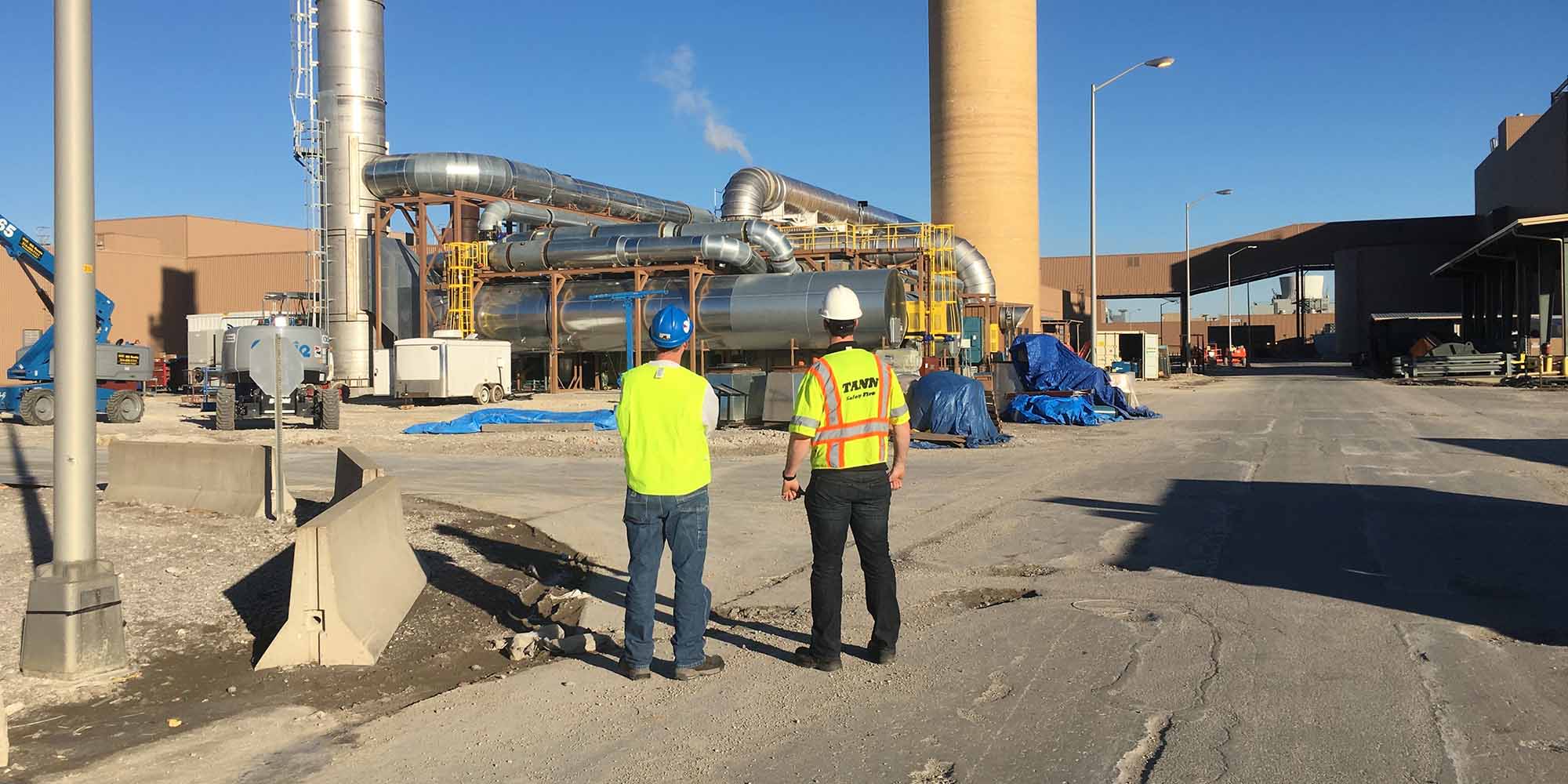
This regenerative thermal oxidizer systems guide is designed to give you everything you need to know for VOC and HAP emission control across manufacturing industries. These systems combine high destruction efficiency with regenerative heat recovery, helping manufacturers maintain environmental compliance while reducing long-term operating costs. Understanding how regenerative thermal oxidizers work — and what separates them from other oxidizer technologies — helps facilities evaluate system performance, efficiency, and long-term operational considerations.
View our Regenerative Thermal Oxidizer Product Page
The regenerative approach fundamentally changed the economics of thermal oxidation by recovering and reusing combustion heat instead of exhausting it into the atmosphere. Earlier oxidizer technologies required significantly more supplemental fuel to maintain destruction temperatures, making long-term operation costly for many facilities. Modern RTO systems improved this process by using ceramic media beds to capture and transfer heat throughout the oxidation cycle, dramatically improving thermal efficiency and reducing operating costs.
What Makes Regenerative Thermal Oxidizers Different
Regenerative thermal oxidizers are primarily differentiated by their regenerative heat recovery process. Ceramic media beds capture heat from the outgoing clean air stream and transfer that energy back into the incoming process exhaust before combustion. This regenerative cycle allows thermal efficiencies to reach up to 97%, significantly reducing fuel consumption compared to many other oxidizer technologies.
RTO systems operate by alternating airflow through multiple ceramic media chambers. Process exhaust first passes through a heated media bed before entering the combustion chamber, where VOCs are oxidized at elevated temperatures. The cleaned exhaust stream then passes through a separate media chamber, transferring heat back into the ceramic material before discharge. Directional valves periodically reverse airflow through the system, allowing the regenerative cycle to repeat continuously.
This regenerative cycle creates a self-sustaining thermal system that requires minimal supplemental fuel once operating temperature stabilizes. The ceramic media serves as a thermal battery, storing and releasing heat with each flow reversal. High heat capacity and excellent thermal transfer properties make ceramic media ideal for this demanding application.
Two-chamber and three-chamber configurations serve different application requirements. Two-chamber systems offer simpler construction and lower capital cost, achieving destruction efficiencies up to 99%. Three-chamber designs add a purge zone that captures gases released during valve transitions, enabling 99%+ destruction efficiency for applications with stringent permit requirements.
The technology scales effectively across a wide capacity range. Systems treating 5,000 SCFM serve smaller manufacturing operations, while large installations handle 400,000 SCFM or more from major industrial facilities. This flexibility makes RTO technology applicable across virtually every manufacturing sector with VOC compliance obligations.
For a more detailed breakdown of airflow reversal and regenerative heat exchange, read our guide explaining how regenerative thermal oxidizers work.
Energy Efficiency Advantages
Energy efficiency represents the most compelling economic advantage of regenerative thermal oxidizer technology for high-volume industrial exhaust applications. Fuel savings compared to other oxidizer types often recover the capital cost difference within two to three years, with benefits continuing throughout the system’s 20 to 30 year lifespan. Facilities processing significant exhaust volumes realize substantial operating cost reductions.
Learn more about industrial regenerative thermal oxidizer system configurations and performance considerations on our RTO systems page.
The mathematics clearly favor regenerative systems. A recuperative thermal oxidizer achieving 70% heat recovery requires roughly six times more supplemental fuel than an RTO achieving 95% thermal efficiency under identical conditions. Facilities focused on reducing fuel consumption typically invest in high-efficiency regenerative thermal oxidizer systems designed for long-term operational savings. At typical natural gas prices and continuous operation, this difference amounts to hundreds of thousands of dollars annually for large installations.
Higher thermal efficiency also reduces environmental impact beyond the pollutants being controlled. Lower fuel consumption means less combustion-related carbon dioxide emission. Facilities tracking greenhouse gas footprints find that efficient RTOs contribute less to climate impact than alternative control technologies requiring more supplemental fuel.
Autothermal operation becomes achievable at lower VOC concentrations with high-efficiency RTOs. Once VOC combustion generates sufficient heat to sustain destruction temperature independently, facilities eliminate fuel costs entirely and pay only for electricity. Systems with 97% thermal efficiency reach autothermal operation at VOC concentrations that would require continuous burner firing in less efficient equipment.
Secondary heat recovery systems can capture excess thermal energy from RTOs operating autothermally or near-autothermally. Heat exchangers downstream of the oxidizer extract energy for process heating, building heating, or other beneficial uses. This recovered heat provides additional economic value beyond fuel savings.
Destruction Efficiency Performance
Regenerative thermal oxidizers deliver the destruction efficiency performance that stringent permits demand. Properly designed and maintained systems routinely achieve 99%+ VOC destruction, satisfying even the most rigorous air quality requirements. This performance reliability has made RTOs the technology of choice for facilities facing challenging compliance obligations.
The combination of high temperature, adequate residence time, and thorough mixing ensures complete pollutant oxidation. Exhaust gases reach approximately 1,500°F in the combustion chamber, providing sufficient energy to break molecular bonds in virtually all common industrial VOCs. Residence times of 0.5 to 1.0 seconds allow complete reaction with available oxygen.
Three-chamber configurations achieve the highest destruction efficiencies by eliminating untreated emissions during valve transitions. When flow switches between beds in a two-chamber system, a small volume of unprocessed gas escapes. The third chamber captures this gas for treatment during the next cycle, pushing destruction efficiency above 99%. Puff chamber additions to two-chamber systems achieve similar results.
Destruction efficiency remains stable over time when facilities maintain their equipment properly. Unlike catalytic systems that degrade as catalyst activity declines, RTOs maintain performance as long as operating temperatures and residence times remain within design parameters. This stability simplifies compliance management and reduces the risk of permit violations from gradual performance decay.
Stack testing consistently confirms that well-maintained RTOs meet or exceed their design destruction efficiency. Facilities typically test every two to five years depending on permit requirements, with results documenting ongoing compliance. Historical test records demonstrate the long-term reliability that manufacturers depend on for uninterrupted operation.
Reliability and Uptime
Operational reliability differentiates quality regenerative thermal oxidizer installations from problematic systems that burden facilities with downtime and emergency repairs. Well-designed RTO systems from experienced manufacturers routinely achieve 99%+ uptime, operating continuously for years with only planned maintenance outages. This reliability protects production schedules and compliance status simultaneously.
Robust mechanical design contributes to RTO reliability. The core oxidation process involves no moving parts within the hot zone, eliminating wear mechanisms that cause failures in rotating equipment. Ceramic media beds, refractory linings, and steel shells withstand thermal cycling and continuous high-temperature exposure when properly designed and installed.
Valve systems represent the primary mechanical components requiring ongoing attention. Modern valve designs incorporate features that minimize wear and simplify maintenance. Quality actuators, durable seals, and accessible configurations enable rapid service that keeps downtime brief during planned maintenance intervals.
Control systems monitor operating parameters continuously, alerting operators to developing problems before they cause failures. Temperature trending, pressure monitoring, and diagnostic algorithms identify abnormal conditions for investigation. Remote monitoring capabilities enable equipment manufacturers to support facilities without dispatching technicians for every concern.
Preventive maintenance programs preserve the reliability that quality equipment provides initially. Regular inspection identifies wear before it causes failures. Component replacement during planned outages prevents emergency situations that disrupt production. Facilities that invest in maintenance enjoy decades of reliable service from their RTO systems.
Preventive maintenance and inspection programs play an important role in long-term oxidizer reliability. Learn more about thermal oxidizer service and maintenance.
Application Versatility
Regenerative thermal oxidizers serve virtually every manufacturing industry with VOC emission control requirements. This versatility reflects the technology’s ability to handle diverse exhaust characteristics while maintaining high destruction efficiency and thermal performance. Few other control technologies match this broad applicability.
Automotive manufacturing relies heavily on RTO technology for paint shop emission control. The combination of high exhaust volumes, moderate VOC concentrations, and continuous operation matches RTO capabilities perfectly. Assembly plants worldwide depend on regenerative systems to maintain air quality compliance while coating vehicles efficiently.
Chemical processing facilities use RTOs to control emissions from reactors, distillation systems, storage tanks, and loading operations. The technology handles the varied compound mixtures and concentration fluctuations common in chemical manufacturing. Robust designs tolerate process upsets that would damage more sensitive equipment.
Pharmaceutical manufacturing demands exceptional destruction efficiency for potent compound control. RTOs achieving 99.90%+ destruction meet the stringent requirements that pharmaceutical facilities face. The consistent performance over time provides the compliance reliability that this highly regulated industry requires.
Printing and packaging operations generate solvent emissions that RTOs destroy effectively. Web offset printing, flexographic printing, and coating operations all produce exhaust streams suited to regenerative thermal oxidation. The technology’s efficiency advantages prove particularly valuable for operations running multiple shifts.
Food and flavor processing creates odorous emissions alongside regulated VOCs. RTOs eliminate both concerns simultaneously, protecting community relations while maintaining permit compliance. The high temperatures that destroy pollutants also eliminate odor-causing compounds that might otherwise generate complaints.
Comparing RTO Systems and Other Oxidizer Technologies
Comparing regenerative thermal oxidizers against alternative technologies illuminates why RTOs dominate the industrial emission control market. Each technology offers specific advantages, but RTOs provide the best overall combination of destruction efficiency, operating cost, and reliability for most high-volume applications.
Catalytic oxidizers achieve pollutant destruction at lower temperatures by using catalysts to accelerate oxidation reactions. This approach reduces fuel consumption compared to non-regenerative thermal systems but cannot match RTO thermal efficiency. Catalyst poisoning by silicones, sulfur, and other compounds limits applications and creates ongoing replacement expense. RTOs handle contaminated streams that would destroy catalysts.
Recuperative thermal oxidizers use metal heat exchangers rather than ceramic media for heat recovery. These systems achieve 50% to 70% thermal efficiency, significantly below RTO performance. The metal construction tolerates some particulate that would foul ceramic media, creating a niche for dusty applications. However, most facilities benefit more from RTO efficiency advantages.
Direct-fired thermal oxidizers operate without heat recovery, offering lowest capital cost but highest operating expense. These systems suit applications with very high VOC concentrations that provide combustion heat or intermittent operations with limited annual hours. For continuous operations with typical industrial concentrations, RTO economics prove far superior.
Carbon adsorption concentrates VOCs for recovery or destruction rather than oxidizing them directly. This technology suits solvent recovery applications where captured material has economic value. For applications requiring destruction rather than recovery, thermal oxidation provides more straightforward compliance. Different oxidizer technologies may be more suitable depending on exhaust characteristics, VOC concentrations, airflow volumes, and operational requirements.
Key RTO System Components
Understanding major RTO components helps facilities evaluate equipment options and maintain systems effectively throughout their service life. Quality components and proper integration determine whether an RTO delivers decades of reliable service or struggles with chronic problems. Specification details matter significantly.
Ceramic media beds store and release thermal energy that makes regenerative operation possible. Media configuration affects heat transfer efficiency, pressure drop, and resistance to fouling. Bed depth typically ranges from 5 to 8 feet to provide adequate heat transfer surface area. Media quality and proper installation ensure uniform flow distribution.
The combustion chamber maintains destruction temperature through supplemental burner firing when VOC heat content proves insufficient. Chamber design ensures adequate residence time and mixing for complete oxidation. Refractory linings protect steel shells from high-temperature exposure while minimizing heat loss.
Valve systems direct exhaust flow through the appropriate media beds according to the regenerative cycle. Valve selection involves choices between different actuation systems and sealing approaches. Proper sizing, quality construction, and appropriate materials ensure reliable operation over thousands of daily cycles.
Control systems manage the regenerative cycle, monitor operating parameters, and interface with facility systems. Modern controls provide data logging, remote access, and diagnostic capabilities that simplify operation and maintenance. Integration with plant networks enables centralized monitoring across multiple systems.
Fans and ductwork move exhaust from process sources through the RTO and to atmosphere. Proper sizing ensures adequate capacity without excessive energy consumption. Quality construction withstands the operating environment while minimizing maintenance requirements.
Final Thoughts
Regenerative thermal oxidizer systems continue to play a significant role in industrial VOC and HAP emission control across a wide range of manufacturing industries. High thermal efficiency, dependable destruction performance, and long-term operational durability make RTO technology a commonly used solution for facilities evaluating long-term air pollution control strategies.
When comparing emission control technologies, manufacturers often evaluate operating costs, thermal efficiency, maintenance requirements, destruction performance, and long-term reliability. Understanding how different oxidizer system designs impact these factors can help facilities make more informed decisions based on their application requirements.
Learn More About Our RTO Systems
Explore how system design and integration impact long-term performance.
Need Help Evaluating Your Application?
Our team can help assess your system requirements and long-term operating considerations.
TANN Corporation’s engineers have been designing regenerative thermal oxidizer systems for 40+ years, serving manufacturers across every industry with VOC compliance requirements. Our engineering team evaluates each application individually, recommending system configurations optimized for specific exhaust characteristics and compliance obligations. From initial assessment through installation and decades of ongoing support, we deliver complete emission control solutions. Contact us today for a free quote or to learn more.