
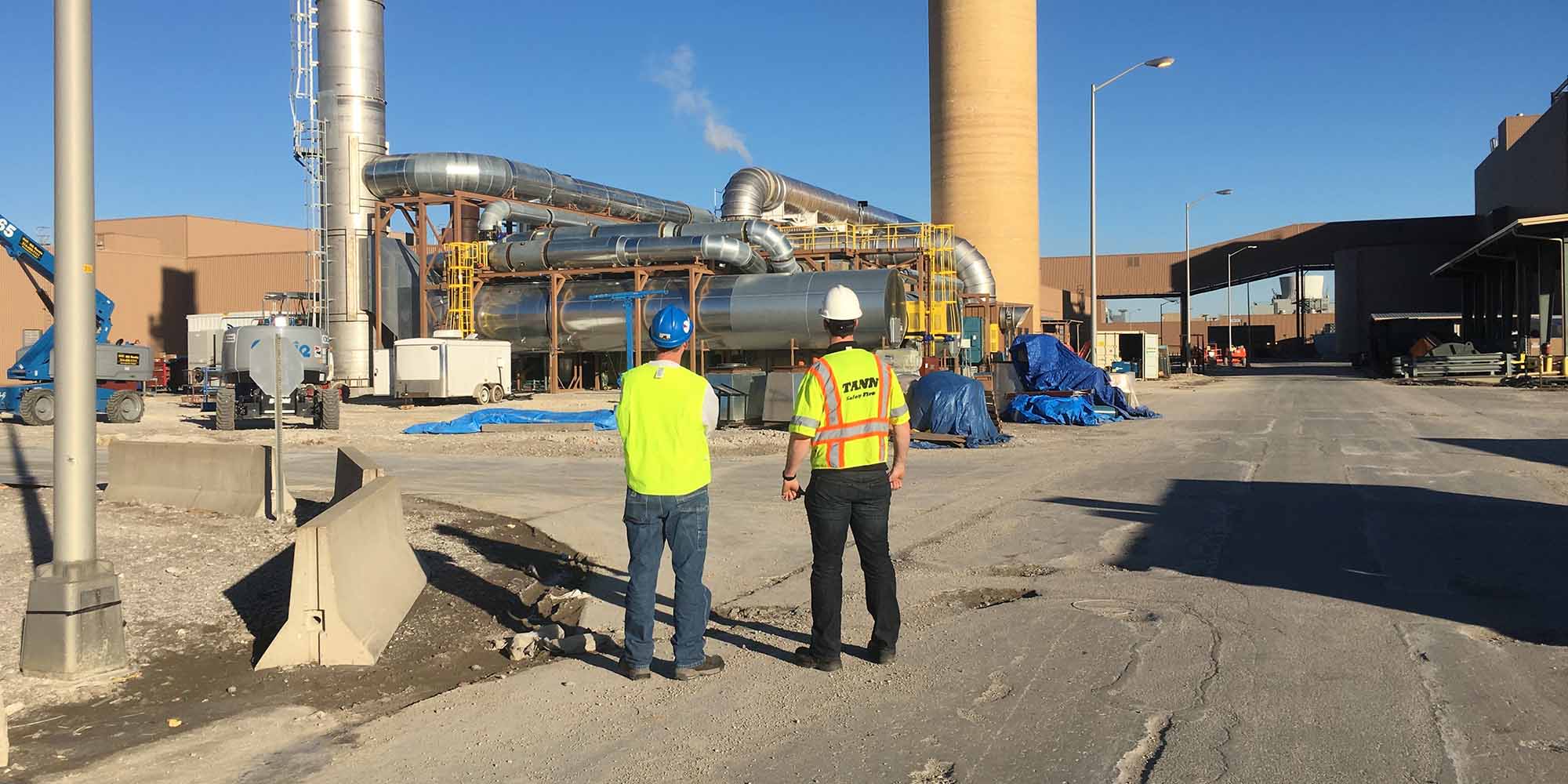
Oxidizer types vary significantly in design, efficiency, and application fit, so choosing the right oxidizer is critical for reliable VOC destruction and predictable costs. Industrial teams weighing regenerative thermal oxidizers (RTOs), catalytic thermal oxidizers, recuperative thermal oxidizers, and direct-fired oxidizers must understand the tradeoffs across efficiency, maintenance, capital outlay, and lifecycle economics. Select the wrong oxidizer and you risk higher fuel burn, inconsistent performance, or compliance gaps that are costly to correct.
Because thermal oxidizer projects often run from hundreds of thousands to several million dollars, a rigorous comparison by process conditions and total cost of ownership (TCO) is essential. As you’ll see below, regenerative oxidizer technology dominates high-volume applications due to exceptional heat recovery; however, catalytic, recuperative, and direct-fired systems each excel in particular niches.
What Is an Oxidizer?
An oxidizer is industrial equipment that destroys volatile organic compounds (VOCs), hazardous air pollutants (HAPs), and odors by oxidation at elevated temperatures. Successful oxidation requires the “Three T’s”: Time, Temperature, and Turbulence to fully convert organics to CO₂ and H₂O.
Typical design anchors include:
- Combustion temperature: ≈1,400–1,500°F for thermal systems
- Residence time: ≈0.5–1.0 seconds at temperature
- Destruction efficiency (DRE): ≥95% to meet most permits; many designs target 98–99%+
Heat recovery is what distinguishes oxidizer types:
- Regenerative (RTO): Ceramic media store and return heat for 95–97% thermal efficiency
- Recuperative: Metal heat exchangers deliver ≈40–80% thermal efficiency
- Catalytic: Catalyst lowers reaction temperature to ≈600–700°F
- Direct-fired: No heat recovery; highest fuel use but lowest system complexity
Modern systems pair robust combustion hardware with intelligent controls, safety interlocks, and emissions verification to sustain DRE and reduce fuel.
Regenerative Thermal Oxidizers (RTOs)
Why RTOs lead: Regenerative thermal oxidizers use ceramic media beds that absorb heat from clean exhaust and preheat incoming process air, regularly achieving 95–97% thermal efficiency with 99%+ destruction efficiency in many applications. Switching valves alternate flow every 2–4 minutes so beds trade roles between heating and storing.
Where RTOs fit best:
- Flow: ≈10,000–100,000+ SCFM (high volume / continuous duty)
- Streams: Paint lines, coating ovens, chemical and pharma process vents
- Goal: Lowest operating cost through maximal heat recovery
Lifecycle advantages:
- Fuel savings: Many units run “self-sustaining” at load with minimal burner demand
- Service: Annual valve checks and regenerative thermal oxidizer maintenance on media condition; ceramic media life is typically 5–10 years
- Longevity: Refractory-lined chambers routinely perform for decades
Catalytic Thermal Oxidizers
Strengths:
- Lower operating temperature: Reduced fuel use for clean, lean VOC streams (<≈1,000 ppm)
- Compact footprint: Often smaller and lighter than thermal units
Limitations:
- Catalyst poisoning/fouling: Sulfur, heavy metals, silicone, or particulate may shorten catalyst life (often 2–5 years)
- Composition sensitivity: Best for consistent, clean gas streams
Good fit: Moderate flows, cleaner chemistries, space constraints—especially where a regenerative catalytic oxidizer (catalyst + ceramic media) can blend efficiency with a small footprint.
Recuperative Thermal Oxidizers
Strengths:
- Moderate capital cost: Below RTOs for many mid-size applications
- Maintainability: Access to exchanger surfaces for cleaning
- Faster cycling: No ceramic mass to heat, so better for batch or intermittent duty
Typical fit:
- Flow: ≈5,000–25,000 SCFM
- Industries: Printing, packaging, specialty chemical lines with steady schedules
- Goal: Balanced capex/opex when an RTO’s capital premium isn’t justified
When you need dependable efficiency without RTO-level capex, a recuperative thermal oxidizer hits the middle ground.
Direct-Fired Oxidizers
Simplicity first: Direct-fired oxidizers are essentially burners and a chamber—no heat recovery. That means the lowest initial cost and the highest fuel use.
When they make sense:
- Operating profile: Low annual hours or sporadic duty
- Applications: Pilot plants, emergency vents, small-scale processes
- Benefits: Fast startup/shutdown, minimal fouling risk, straightforward controls
Caveat: For continuous operation, fuel costs rise quickly. When flows are <≈5,000 SCFM or hours are limited, direct-fired can still be the pragmatic answer.
Oxidizer Comparison Guide
Thermal efficiency & fuel use (typical):
- RTO: 95–97% (lowest fuel consumption at scale)
- Recuperative: 40–80% (moderate fuel)
- Catalytic: Operates at ≈600–700°F (low fuel for clean streams)
- Direct-fired: No recovery (highest fuel)
Capital cost & complexity:
- RTO: Highest capex; most efficient at volume; valve/media complexity
- Recuperative: Mid-capex; simpler mechanicals than RTO
- Catalytic: Mid-capex; catalyst management required
- Direct-fired: Lowest capex; minimal hardware
Application “fit”:
- High-volume / continuous: RTO
- Clean, lean streams / space-limited: Catalytic
- Mid-volume / intermittent: Recuperative
- Low hours / small flows: Direct-fired
Bottom line: At higher volumes and hours, RTO operating savings often deliver 1–3-year energy payback versus other types. For cleaner, smaller, or intermittent applications, catalytic or recuperative designs can win on simplicity and capex. Direct-fired remains the “simple tool” for niche duty cycles.
Choosing the Right Oxidizer Type
Evaluate your process first:
- Flow envelope: Design, peak, and turndown
- VOC loading & chemistry: Concentration, poisoners, particulate, condensables
- Duty cycle: Continuous vs batch; annual hours
- Space and utilities: Footprint, access, electrical, gas pressure
- Compliance & testing: Required DRE, monitoring, and recordkeeping
- Lifecycle economics: Fuel, maintenance, spares, and staffing
Then align to the best technology:
- High flows/long hours: Regenerative thermal oxidizer (optimize valve timing, media selection, and thermal oxidizer design for pressure drop and efficiency)
- Clean/lean chemistries: Catalytic thermal oxidizer (validate catalyst compatibility)
- Mid-range/structured batches: Recuperative thermal oxidizer
- Sporadic/low volume: Direct-fired oxidizer
Work with an experienced thermal oxidizer manufacturer that offers multiple technologies so recommendations are application-driven—not product-limited. Finally, structure a 15–20-year TCO comparison; lowest capex rarely equals lowest cost.
Frequently Asked Questions (Quick Guide)
What’s the difference between an RTO and a recuperative thermal oxidizer?
- RTO: Ceramic media “regenerates” heat (95–97% efficiency).
- Recuperative: Metal exchanger “recovers” heat (≈40–80% efficiency).
Result: RTOs minimize fuel at high volume; recuperatives balance capex and opex at mid-volume.
When is a catalytic thermal oxidizer better than an RTO?
- For clean, low-ppm VOC streams where catalyst life is protected, catalytic oxidizers achieve low fuel use with a compact footprint—especially where an RTO’s capital premium or space is a constraint.
Is a direct-fired oxidizer ever the best choice?
- Yes—low hours, small flows, or emergency venting. Fuel cost is high for continuous duty, but simplicity and fast response can be decisive for niche use cases.
What maintenance matters most across types?
- RTO equipment: Valve timing/seals, ceramic media condition, pressure drop trends
- Catalytic: Catalyst fouling/poisoning checks, differential pressure, temperature uniformity
- Recuperative: Heat-exchanger cleanliness and integrity
- Direct-fired: Burner tuning, flame safety, refractory inspection
Consistent preventive care protects uptime, fuel efficiency, and DRE.
Final Thoughts
Choosing the right oxidizer is a process decision, not a catalog pick. By mapping your flow, chemistry, duty cycle, and compliance targets to the right technology—RTO, catalytic, recuperative, or direct-fired—you’ll control emissions with confidence and keep fuel spend in check. For high-volume applications, regenerative oxidizer designs remain the gold standard for the lowest operating cost over time. For cleaner or smaller applications, catalytic or recuperative units can deliver excellent results with simpler hardware. And for intermittent or small-flow needs, direct-fired keeps the solution simple.
If you’re evaluating options now, a short engineering review (heat balance, pressure-drop model, and controls strategy) clarifies the best path in days—not weeks. An experienced thermal oxidizer manufacturer can compare designs objectively, estimate real fuel usage, and project maintenance needs, so your selection pays off for years.
TANN Corporation’s engineers have been designing regenerative thermal oxidizer systems for 40+ years, serving manufacturers across every industry with VOC compliance requirements. Our engineering team evaluates each application individually, recommending system configurations optimized for specific exhaust characteristics and compliance obligations. From initial assessment through installation and decades of ongoing support, we deliver complete emission control solutions. Contact us today for a free quote or to learn more.