
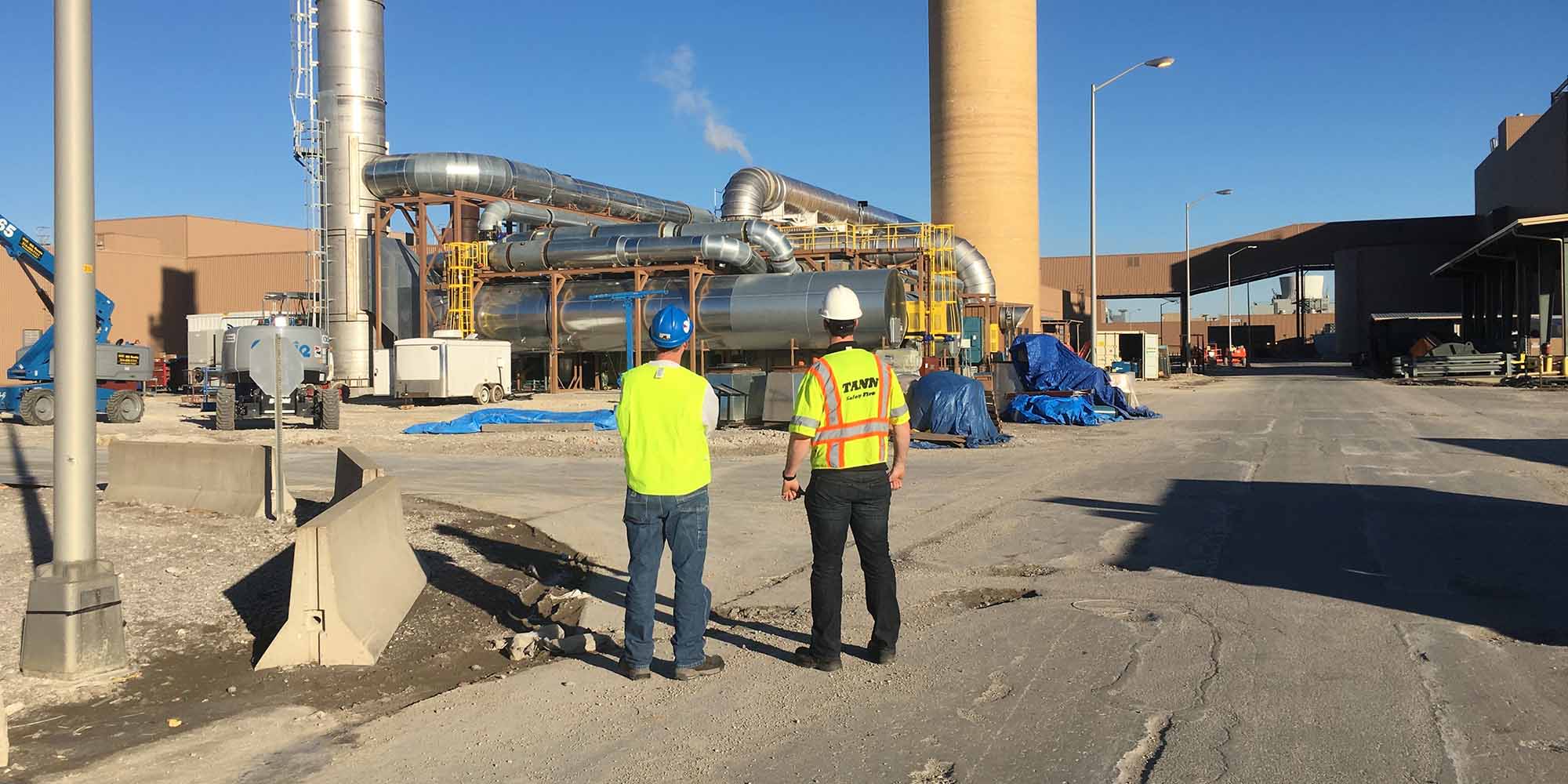
RTO operating costs represent the ongoing investment required to maintain air quality compliance through regenerative thermal oxidation. While capital equipment costs dominate initial purchasing discussions, operating expenses accumulate over the 20 to 30 year lifespan of a properly maintained system, often exceeding the original equipment investment several times over. Manufacturers who understand what drives these costs can make informed decisions during equipment selection and optimize their systems for economic efficiency throughout their service life.
Thermal efficiency stands as the most significant factor affecting RTO operating costs, directly determining fuel consumption for any given exhaust volume and pollutant concentration. Systems achieving 95% thermal efficiency consume roughly half the fuel of systems operating at 90% efficiency under identical conditions. This difference compounds over thousands of operating hours annually, creating substantial cost variance between equipment designs and operating practices.
Components of RTO Operating Costs
Operating a regenerative thermal oxidizer generates costs across several categories that facility managers should understand and track when evaluating RTO operating costs. Natural gas or propane fuel typically represents the largest expense, followed by electricity, maintenance, and periodic component replacement. The relative importance of each category varies based on system design, operating conditions, and local utility rates.
Fuel costs depend directly on thermal efficiency and the heat content of the exhaust stream being treated. RTOs with higher thermal efficiency recover more combustion heat, reducing the supplemental fuel required to maintain destruction temperature. Exhaust streams containing significant VOC concentrations contribute combustion heat when pollutants oxidize, further reducing fuel requirements.
Electricity powers the main system fan that moves exhaust through the oxidizer, along with auxiliary equipment including valve actuators, control systems, and instrumentation. Fan power consumption scales with exhaust volume and system pressure drop. Efficient fan selection and proper system design minimize electrical costs without sacrificing performance.
Maintenance expenses include routine inspections, preventive service, and repairs that keep equipment operating reliably. Facilities that invest in proactive maintenance spend less over time than those that defer service until failures occur. Emergency repairs cost more than scheduled maintenance and cause production disruptions that compound economic impact.
Component replacement addresses parts that wear or degrade over the system lifespan. Ceramic media, valve seals, refractory linings, and instrumentation all require eventual replacement. Planning for these expenses avoids budget surprises and ensures timely replacement before component degradation affects system performance.
How Thermal Efficiency Affects Fuel Consumption
Thermal efficiency measures how effectively an RTO recovers and reuses combustion heat, expressed as the percentage of heat retained within the system. Modern regenerative thermal oxidizers achieve up to 97% thermal efficiency, meaning only 3% of combustion heat escapes with the exhaust rather than preheating incoming gases. This exceptional heat recovery dramatically reduces fuel requirements compared to oxidizer designs with lower efficiency.
The mathematics of thermal efficiency create compelling economic differences. An RTO treating 20,000 SCFM of exhaust with zero VOC content requires approximately 2.0 MMBtu per hour of supplemental heat at 95% thermal efficiency. That same application at 90% efficiency requires roughly 4.0 MMBtu per hour. At natural gas prices of $5 per MMBtu, this difference costs $10 per operating hour, or approximately $80,000 annually for continuous operation.
Achieving high thermal efficiency depends on ceramic media bed design, proper bed depth, and system configuration. Heat exchange beds with 5 to 8 feet of media depth provide sufficient surface area for thorough heat transfer between exhaust gases and ceramic material. Shallower beds limit heat transfer and reduce thermal efficiency regardless of media quality.
System configuration also affects achievable efficiency. Three-chamber RTOs inherently achieve higher destruction efficiency than two-chamber designs because the purge cycle captures heat that would otherwise escape during valve transitions.
Thermal efficiency degrades over time if ceramic media deteriorates or becomes contaminated. Particulate accumulation, chemical attack, and physical degradation all reduce heat transfer effectiveness. Regular inspection and timely media replacement preserve the thermal efficiency that controls fuel consumption.
The Role of VOC Concentration
Exhaust stream VOC concentration significantly influences fuel requirements because pollutant oxidation releases heat that supplements burner output. Streams with higher VOC concentrations require less supplemental fuel, while dilute streams demand more burner firing to maintain destruction temperature. Understanding this relationship helps facilities predict operating costs accurately.
The relationship between concentration and fuel consumption follows a curve rather than a straight line. At very low concentrations, the burner provides nearly all required heat. As concentration increases, VOC combustion heat increasingly supplements the burner. At sufficiently high concentrations, the system becomes autothermal, requiring no supplemental fuel and potentially generating excess heat.
Most industrial applications fall somewhere along this curve rather than at either extreme. Coating operations, printing processes, and chemical manufacturing typically generate exhaust with enough VOC content to provide meaningful heat contribution without reaching autothermal operation. The specific concentration depends on process parameters, capture system design, and dilution air requirements.
Process modifications that increase VOC concentration can dramatically reduce operating costs. Reducing dilution air, improving capture hood efficiency, or concentrating exhaust through adsorption systems all raise inlet concentration. Doubling VOC concentration often reduces fuel consumption by 30% to 50%, depending on the starting point and thermal efficiency. These modifications require engineering evaluation to ensure safe operation within explosion limits.
Concentration variability affects operating costs by requiring system design for peak rather than average conditions. Processes with wide concentration swings need burner capacity for minimum concentration periods while potentially wasting excess heat during high concentration periods. Concentration equalization through process scheduling or buffering can improve overall economics.
Electricity Costs and Fan Power
Electrical consumption represents the second major operating cost category for most RTO installations. The main system fan consumes the majority of electrical power, with consumption determined by exhaust volume, system pressure drop, and fan efficiency. Understanding these factors enables informed equipment selection and operational optimization.
System pressure drop results from airflow resistance through ductwork, dampers, ceramic media beds, and combustion chambers. Higher pressure drop requires more fan power to move the same exhaust volume. Well-designed systems minimize unnecessary pressure drop while maintaining flow distribution that ensures effective heat transfer and pollutant destruction.
Fan selection significantly affects electrical consumption over the system lifespan. High-efficiency fan designs cost more initially but reduce operating expenses that accumulate over decades of operation. Variable frequency drives enable fan speed adjustment to match actual exhaust volumes, reducing power consumption during partial load operation.
Ceramic media type and condition affect pressure drop through the heat exchange beds. Media degradation or contamination increases resistance, forcing higher fan power consumption to maintain airflow. Regular media inspection identifies problems before they significantly impact electrical costs.
Proper system maintenance preserves design pressure drop throughout the equipment lifespan. Cleaning or replacing inlet filters, maintaining damper operation, and addressing ductwork leaks all contribute to minimizing fan power requirements. Facilities that track pressure drop over time can identify developing problems before they cause excessive energy consumption.
Maintenance Costs and Practices
Maintenance expenses vary dramatically based on facility practices, ranging from minimal investment in proactive programs to substantial emergency repair costs for neglected equipment. Facilities implementing comprehensive preventive maintenance programs typically achieve 99%+ uptime while spending less on maintenance over time than those operating equipment until failure. The economics strongly favor proactive approaches.
Annual inspection represents the foundation of cost-effective maintenance. Trained technicians examine ceramic media condition, valve operation, refractory integrity, burner performance, and control system function. Identifying developing problems during scheduled inspections enables planned repairs at lower cost than emergency service.
Valve maintenance prevents the leakage that reduces destruction efficiency and increases fuel consumption. Inspection to verify proper operation identifies wear before it causes compliance problems. Seal replacement during planned outages costs a fraction of emergency repairs and avoids the destruction efficiency losses that trigger permit violations.
Ceramic media represents a significant periodic replacement expense. Media lifespan varies by application, with some installations achieving 15 to 20 years of service while others require replacement within 5 to 10 years due to particulate exposure or chemical attack. Planning for media replacement based on actual condition assessment avoids both premature replacement expense and performance degradation from overextended service.
Control system maintenance ensures reliable operation and accurate process parameter monitoring. Instrument calibration, software updates, and communication system verification maintain the functionality that enables efficient operation. Modern control systems with remote monitoring capabilities reduce service costs by enabling diagnosis without site visits.
Strategies for Reducing Operating Costs
Facilities operating RTOs have multiple opportunities to reduce costs without sacrificing compliance or performance. The most effective strategies address thermal efficiency, VOC concentration, and maintenance practices, as these factors dominate total operating expense. Evaluating current operations often reveals improvement opportunities with attractive payback periods.
Thermal efficiency optimization begins with understanding current system performance. Measuring inlet and outlet temperatures during normal operation indicates actual heat recovery. Values significantly below design specifications suggest media degradation, distribution problems, or other issues worth investigating. Restoring design thermal efficiency often provides rapid payback through fuel savings.
Heat recovery systems capture excess thermal energy for beneficial use elsewhere in the facility. Secondary heat exchangers can preheat process air, building makeup air, or water for facility use. Facilities with autothermal or near-autothermal RTO operation have particular opportunity to extract value from excess heat.
Process integration reduces operating costs by matching RTO operation to actual production requirements. Shutting down or reducing capacity during non-production periods eliminates unnecessary fuel and electricity consumption. Facilities running RTOs continuously despite batch production schedules often find significant savings through operational optimization.
Concentration enhancement through reduced dilution or improved capture reduces fuel consumption as discussed earlier. Engineering evaluation ensures safe operation while maximizing the economic benefit of higher inlet VOC levels.
Maintenance optimization balances inspection frequency against risk of undetected problems. Some components warrant frequent attention while others need only periodic verification. Experienced service providers help facilities develop maintenance programs that minimize total cost while preserving equipment reliability.
Total Cost of Ownership Perspective
Evaluating RTO economics requires a total cost of ownership perspective that encompasses capital investment, operating expenses, and end-of-life considerations across the full equipment lifespan. Equipment with lower capital cost but higher RTO operating costs often proves more expensive over 20 to 30 years of service than premium equipment with superior efficiency. Proper economic analysis reveals these differences before purchasing decisions.
Capital costs include equipment purchase, installation, and startup expenses. Higher thermal efficiency, more robust construction, and premium components increase initial investment but reduce operating costs and extend service life. Financing costs should reflect the full project investment regardless of how equipment and installation are quoted.
Operating costs as discussed throughout this article accumulate annually over the system lifespan. Even modest efficiency differences or maintenance cost variations compound into substantial sums over decades. Net present value calculations appropriately weight near-term versus future expenses.
End-of-life considerations include major component replacement, system upgrades, and eventual equipment replacement. Well-designed systems with quality construction often continue operating economically beyond 30 years with appropriate maintenance and periodic updates. Inferior equipment may require replacement after 15 to 20 years.
Comparing total cost of ownership across equipment options requires consistent assumptions about fuel prices, electricity rates, production schedules, and maintenance practices. Vendors should provide operating cost estimates based on your specific application parameters rather than generic assumptions. Verifying these estimates against actual operating data from similar installations improves decision confidence.
Final Thoughts
RTO operating costs deserve careful attention during equipment selection and ongoing management throughout the system lifespan. Thermal efficiency, VOC concentration, electricity consumption, and maintenance practices collectively determine whether a facility operates economically or struggles with excessive expenses. Understanding these factors empowers manufacturers to minimize costs while maintaining the compliance performance their permits require.
Facilities evaluating new RTO installations should request detailed operating cost projections based on their specific exhaust characteristics and production schedules. Generic estimates often miss significant factors that affect actual costs. Similarly, facilities with existing RTOs should periodically assess whether their systems operate at design efficiency or have opportunities for improvement.
TANN Corporation’s engineers have been designing regenerative thermal oxidizer systems for 40+ years, serving manufacturers across every industry with VOC compliance requirements. Our engineering team evaluates each application individually, recommending system configurations optimized for specific exhaust characteristics and compliance obligations. From initial assessment through installation and decades of ongoing support, we deliver complete emission control solutions. Contact us today for a free quote or to learn more.