
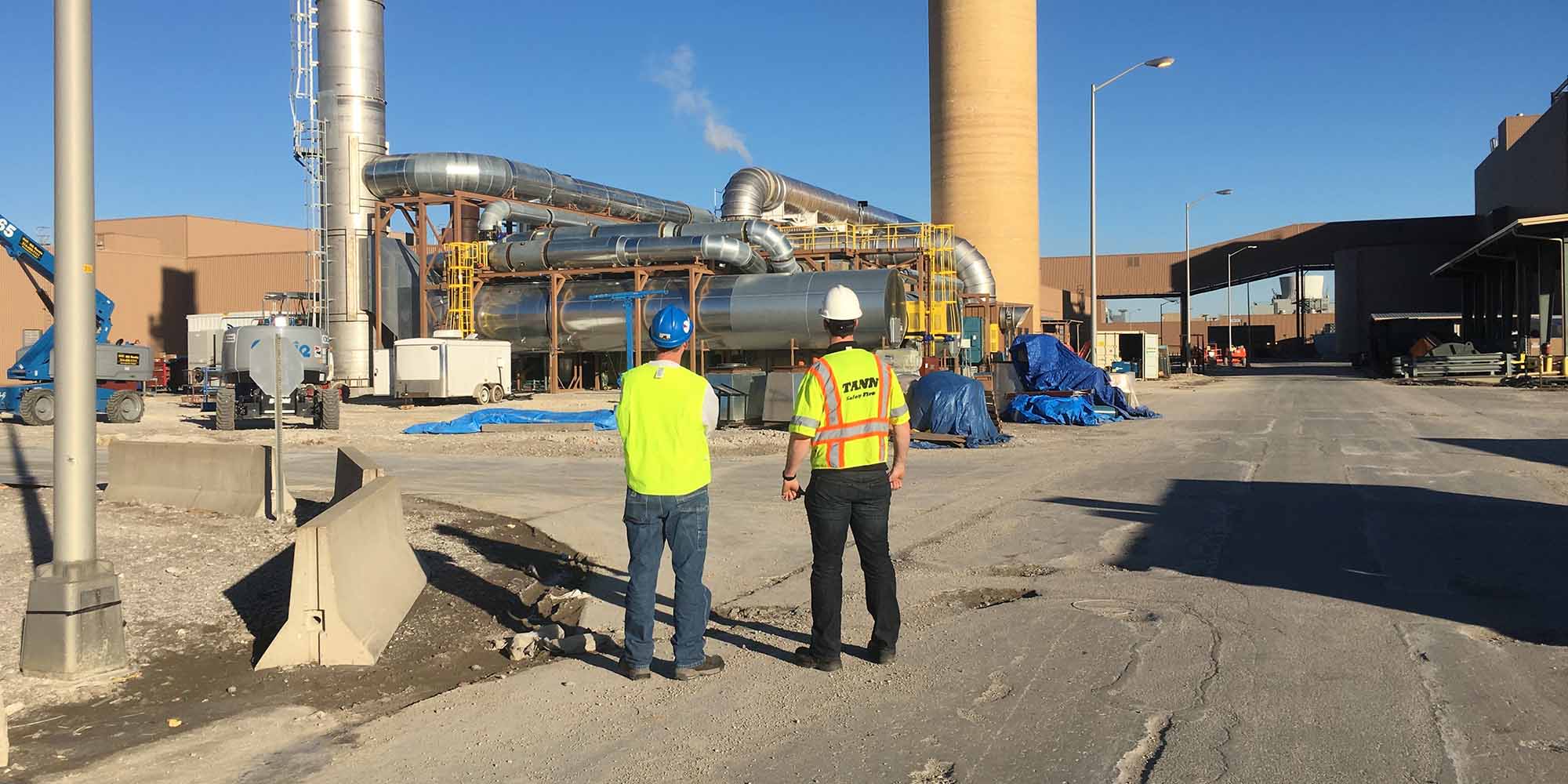
Regenerative thermal oxidizer manufacturers vary widely in engineering depth, build quality, and lifecycle support. The company you choose to design, build, and service your regenerative thermal oxidizer (RTO) directly affects system performance, regulatory compliance, and operating costs for decades. Every RTO is custom-engineered to a specific application. The manufacturer behind that engineering determines whether the system meets its performance guarantees from startup through its full operational life.
This guide breaks down what separates an engineering-driven original equipment manufacturer (OEM) from a basic vendor or reseller. Whether you are specifying a new system, replacing aging equipment, or expanding capacity, these criteria will help protect both your compliance position and your capital investment.
Why the Manufacturer Matters as Much as the Technology
An RTO is not a short-term purchase. Properly designed and maintained, these systems deliver 20 to 30 years of reliable operation. Over that lifespan, the manufacturer’s engineering quality and support infrastructure directly influence destruction efficiency, fuel consumption, and uptime.
A regenerative thermal oxidizer is a long-term capital asset, and the manufacturer’s capabilities determine how it performs over its entire 20- to 30-year operational life. Some regenerative thermal oxidizer manufacturers design and fabricate systems entirely in-house. They control every step from application engineering through final assembly. Others act as resellers or system integrators who outsource fabrication to third-party shops. The difference is significant. An OEM that controls the design and build process can stand behind its performance guarantees in ways a middleman cannot. That accountability is one of the primary reasons choosing the right regenerative thermal oxidizer manufacturer matters so much.
When problems arise years after installation, you want the same engineering team that designed the system available to diagnose the issue. That continuity only exists when you work with a full-service manufacturer. It also ensures that upgrades and replacement components are engineered to fit seamlessly within the existing design parameters.
The financial implications are just as important. An RTO with poor engineering costs more to operate every month through higher fuel consumption and more frequent maintenance. Those costs compound over two to three decades. Selecting a qualified manufacturer is the most effective way to control total cost of ownership before the system ever reaches your site.
Engineering Capabilities to Evaluate
The engineering organization is arguably the most important factor in any evaluation. Thermal oxidizer design requires deep expertise in combustion science, heat transfer, and materials engineering. Every application presents unique variables.
Look for a company with a dedicated team of application engineers. The best regenerative thermal oxidizer manufacturers have designed systems for automotive paint finishing, pharmaceutical processing, chemical manufacturing, printing and packaging, wood finishing, and many other sectors. That breadth of experience matters. It leads to better system recommendations because the team has solved similar challenges before.
A system that is custom-designed for specific exhaust characteristics will consistently outperform a catalog unit sized using generic assumptions. Key capabilities to verify include the following:
- Application evaluation: The manufacturer should review your exhaust volume, temperature, volatile organic compound (VOC) species and concentrations, particulate loading, and operating schedule before recommending a configuration.
- Configuration expertise: Can the firm design both two-chamber and three-chamber RTO systems? Three-chamber designs inherently achieve higher destruction efficiency. The purge cycle captures unprocessed air (VOC laden air) that escapes during valve transitions in two-chamber units.
- Energy recovery integration: For facilities with secondary heat demands, the manufacturer should offer ways to capture waste heat from the RTO exhaust for use elsewhere in the plant.
- Controls and automation: Modern RTO equipment relies on programmable logic controller (PLC) systems. These manage automated startup, shutdown, temperature control, and safety interlocks. The manufacturer should design and program these in-house.
- Compliance-driven design: The system must meet your specific permit requirements. The EPA identifies combustion chamber temperature and outlet VOC concentration as the primary performance indicators for thermal oxidizers. The design should ensure both are consistently achieved.
How References and First Conversations Reveal Engineering Culture
Ask for project references in your industry. A manufacturer that has designed and installed systems for facilities with similar exhaust profiles presents less risk than one quoting outside its experience base. References also give you an opportunity to speak with other plant engineers and EHS managers. Those conversations often reveal more about day-to-day performance than any specification sheet.
Pay attention to how the manufacturer approaches the initial evaluation. An engineering-driven firm will ask detailed questions about your process before presenting a solution. A sales-driven vendor, by contrast, may push a standard configuration without fully understanding your application. The depth of the initial technical conversation is one of the clearest indicators of the engineering culture behind the company. Request a site visit or virtual walkthrough of the manufacturer’s facility early in the process. Seeing the shop floor, meeting the engineering team, and reviewing current projects in fabrication will tell you more than any brochure.
Manufacturing Quality and Facility Standards
Once engineering is complete, fabrication quality determines field performance and longevity. A manufacturer that builds systems in its own facility controls welding quality, refractory installation, insulation integrity, and overall build consistency. Companies that outsource fabrication lose much of that control.
Manufacturers that handle the entire build process in their own facility deliver more consistent quality and shorter lead times than those who rely on third-party fabrication shops. When evaluating manufacturing capabilities, consider these factors:
- In-house fabrication: Does the company cut, weld, and assemble the oxidizer shell, media chambers, combustion chamber, and ductwork in its own shop? Outsourced fabrication introduces variables in quality, communication, and scheduling.
- Refractory and insulation: The combustion chamber operates at approximately 1,500°F. Proper refractory installation is critical for thermal efficiency and shell temperature management. In-house teams inspect quality at every stage.
- Quality assurance: Ask about weld inspection procedures, dimensional checks, and pre-shipment testing. A serious manufacturer tests valve operation, PLC logic, and burner function before the system ships.
- Capacity range: Confirm the facility can build systems at your scale. Standard RTO systems handle 5,000 to 80,000 SCFM. Large installations accommodate up to 400,000 SCFM.
A facility tour is one of the most valuable steps in the evaluation process. Seeing where and how your system will be built reveals details that no sales presentation can replicate. It also gives you a chance to meet the fabrication team and ask questions about timelines, materials sourcing, and testing procedures.
RTO Aftermarket Support and Lifecycle Services
The purchase order marks the beginning of the relationship, not the end. Over two to three decades, your RTO will require ceramic media replacement, valve maintenance, burner and PLC upgrades, compliance testing, and potentially a full refurbishment. The manufacturer you choose today is the partner you will depend on for all of those needs.
The company that designed and built an RTO is best positioned to service, repair, and upgrade that system throughout its full operational life. When evaluating aftermarket capabilities, focus on these areas:
- 24/7 technical support: Oxidizer issues do not wait for business hours. The manufacturer should offer round-the-clock phone support. On-site service response should be available within 24 hours.
- Ceramic media programs: RTO media requires periodic replacement. Structured media typically needs replacement every 5 to 10 years. Random saddle media can last 15 to 20 years depending on the application. The manufacturer should supply media, schedule replacements, and manage installation.
- Spare parts inventory: Critical components like valves, actuators, and burner parts should ship rapidly. Every hour waiting for parts is an hour out of compliance.
- PLC and burner upgrades: As controls technology advances, the manufacturer should offer upgrade paths that extend system capability without requiring full replacement.
- Compliance testing: Stack testing and verification services confirm the system still meets permit requirements year after year.
- Service on all makes and models: A manufacturer willing to service equipment from other OEMs demonstrates both technical depth and a commitment to keeping customers running.
Aftermarket service is where the value of choosing a true OEM becomes most clear. A manufacturer with decades of service history on its own equipment brings diagnostic capability that no third-party provider can match.
Global Reach and Project Delivery
For companies with operations across multiple regions, geographic reach matters significantly. Installing an RTO is a complex undertaking. It involves structural engineering, mechanical and electrical integration, ductwork routing, utility connections, and commissioning. All of this typically happens on a tight timeline.
A manufacturer that offers turnkey project delivery handles every phase as a single point of accountability. One team manages the process from initial engineering studies through installation and startup. This eliminates the coordination burden on your staff when multiple contractors share responsibility. It also ensures the engineering team that designed the system oversees its installation.
Regenerative thermal oxidizer manufacturers with turnkey delivery and global installation experience reduce project risk and compress timelines compared to multi-contractor approaches. Look for a proven track record of international installations and the logistical infrastructure to support projects regardless of location. Firms with offices or partners in multiple countries can respond faster to service needs and navigate the regulatory requirements that vary by jurisdiction.
Also consider the manufacturer’s ability to coordinate with your other contractors and equipment vendors. RTO installation involves interfaces with process equipment, ductwork systems, electrical infrastructure, and building structures. A manufacturer that has managed complex integration projects before will anticipate coordination challenges and keep the schedule on track. Ask how many turnkey installations the company has completed and whether it manages rigging, structural steel, and electrical connections with its own crews or through pre-qualified subcontractors it has worked with on prior projects.
How to Start the Evaluation Process
Beginning the search starts with documenting your application requirements. Before contacting any RTO manufacturer, compile these details:
- Exhaust volume and temperature: Total airflow in SCFM and exhaust temperature leaving the process.
- VOC composition and concentration: Which compounds are present and at what levels? Different species affect system design, operating temperature, and materials of construction.
- Operating schedule: Does the process run continuously or in batch cycles? This affects sizing, heat recovery calculations, and operating cost projections.
- Permit requirements: What destruction efficiency does your permit require? What monitoring and reporting obligations apply?
- Site constraints: Available space, structural limitations, utility availability, and access restrictions all influence system layout.
An engineering study is a valuable first step. A qualified manufacturer will evaluate your application and model system performance under your specific conditions. The study produces a detailed recommendation with projected operating costs. It also confirms the right system configuration before fabrication begins. That upfront engineering investment prevents costly design changes later in the process.
Once you have proposals from multiple regenerative thermal oxidizer manufacturers, compare them on the criteria outlined above. The lowest capital cost rarely delivers the lowest total cost of ownership over a 20- to 30-year system lifespan. Engineering depth, build quality, and aftermarket support all factor into the true cost of the investment.
Create a weighted evaluation matrix that scores each manufacturer on the factors most important to your operation. Engineering capability, fabrication quality, reference installations, aftermarket service, and project delivery approach should all carry significant weight. Price matters, but it should be one factor among many rather than the deciding criterion. A well-engineered system with strong aftermarket support will cost less to own over its full lifespan than a cheaper alternative that requires frequent repairs and premature media replacement.
Final Thoughts
Selecting from among regenerative thermal oxidizer manufacturers requires looking beyond the initial equipment price. Engineering depth, manufacturing quality, aftermarket service, and project delivery all contribute to total value. A system that performs reliably for decades, maintains 99%+ uptime, and delivers destruction efficiency of up to 99% results from working with a manufacturer that leads with engineering. Each regenerative thermal oxidizer manufacturer you evaluate should demonstrate those capabilities clearly.
Evaluate capabilities thoroughly. Visit manufacturing facilities. Check reference installations. Ask the hard questions about long-term support. The decision you make today will define your air pollution control performance for years to come.
Learn More About Our RTO Systems
Explore how system design and integration impact long-term performance.
Need Help Evaluating Your Application?
Our team can help assess your system requirements and long-term operating considerations.
TANN Corporation’s engineers have been designing regenerative thermal oxidizer systems for 40+ years, serving manufacturers across every industry with VOC compliance requirements. Our engineering team evaluates each application individually, recommending system configurations optimized for specific exhaust characteristics and compliance obligations. From initial assessment through installation and decades of ongoing support, we deliver complete emission control solutions. Contact us today for a free quote or to learn more.