


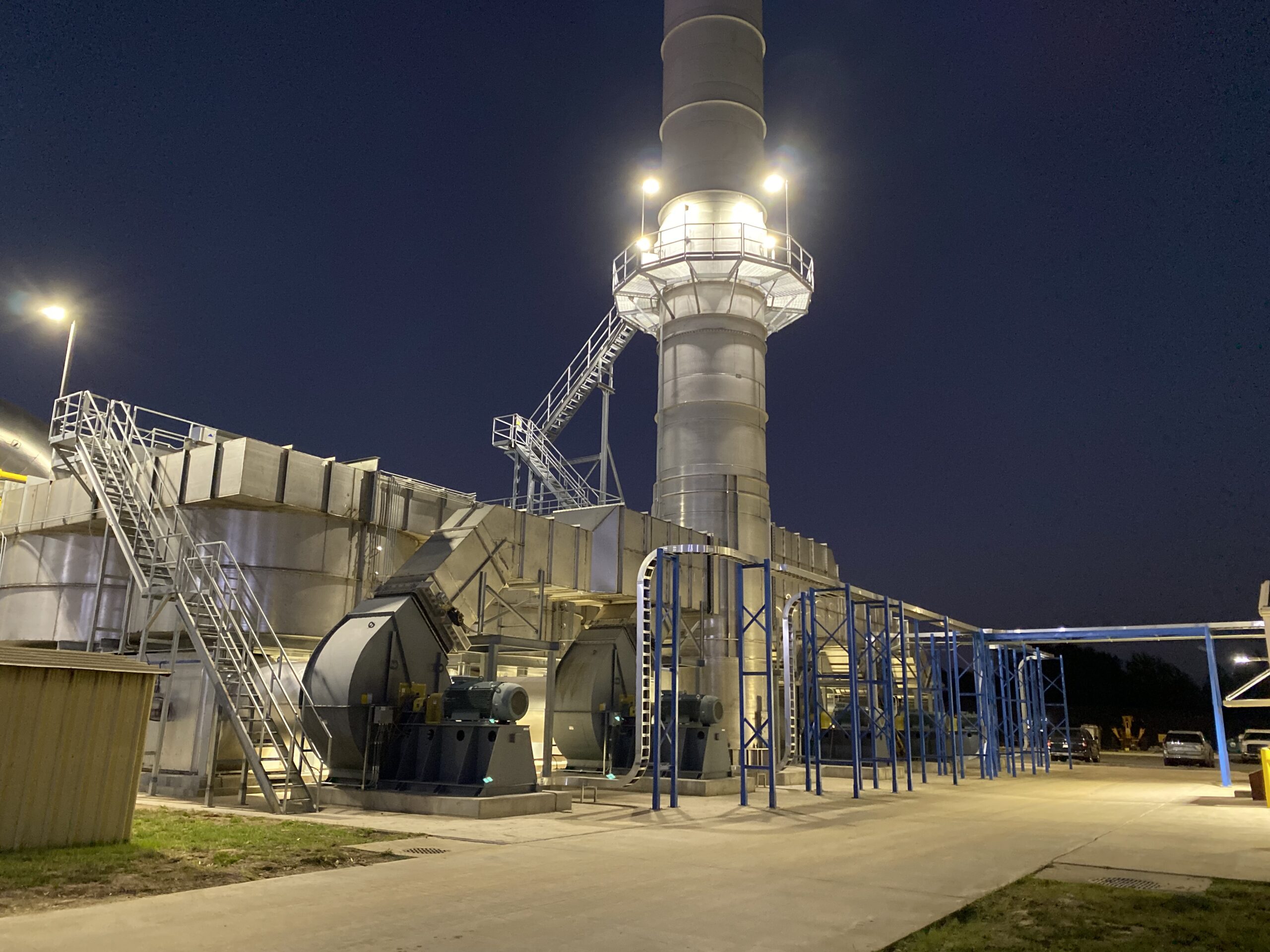


A regenerative thermal oxidizer (RTO systems) is one of the most efficient technologies available for destroying VOC emissions in industrial exhaust streams. By combining high destruction efficiency with regenerative heat recovery, RTO systems help manufacturers maintain environmental compliance while reducing operating costs.
TANN designs and manufactures heavy-duty regenerative thermal oxidizers for demanding industrial applications, with systems engineered for long-term reliability, strong thermal performance, and serviceability.
- VOC destruction efficiency up to 99%+
- Thermal efficiency up to 97%
- Heavy-duty in-house manufactured systems
- Engineered and built in Kaukauna, Wisconsin
What Is a Regenerative Thermal Oxidizer?
A regenerative thermal oxidizer (RTO) is an industrial air pollution control system used to destroy volatile organic compounds (VOCs) and other process emissions in exhaust streams.
RTO systems use high-temperature thermal oxidation combined with regenerative heat recovery to deliver strong emissions performance while reducing fuel consumption.
Ceramic media beds capture and store heat from the outgoing clean air stream, then transfer that heat back into the incoming process exhaust before combustion. This regenerative cycle allows RTO systems to achieve significantly higher thermal efficiency than many other oxidizer technologies.
Regenerative thermal oxidizers are commonly used in applications where manufacturers need high destruction efficiency, lower operating costs, and reliable long-term performance.

Click the diagram to view the full airflow PDF.
How an RTO System Works
A regenerative thermal oxidizer utilizes a regenerative-style heat exchanger made of ceramic material, typically in the form of saddles or honeycomb blocks.
This design allows regenerative systems to achieve much higher thermal efficiencies than shell-and-tube or plate-style heat exchangers.
Process exhaust first enters the system through an inlet media chamber, where it absorbs stored heat from the ceramic media before moving into the combustion chamber.
The burner then raises the air stream to oxidation temperature, where VOCs are converted before the clean air enters the outlet media chamber.
As the cleaned hot air passes through the outlet media bed, it transfers most of its heat back into the ceramic media before discharge.
After a timed cycle, typically every 2–4 minutes, the airflow reverses and the former outlet chamber becomes the inlet chamber. This repeating regenerative cycle is what drives the high efficiency of the RTO design.
Two-Chamber Heat Exchange Process
A two-tank RTO contains two media chambers that function as heat exchangers. Process air passes through one chamber before combustion, while the opposite chamber absorbs heat from the cleaned exhaust stream before the airflow direction reverses.
Heat Recovery & Airflow Reversal
This regenerative cycle repeats every 2–4 minutes. A set of valves located below each chamber controls the direction of airflow and allows the system to continuously recover and reuse thermal energy.
See it in action below: the same RTO shown before and after a valve switch.
Before the switch: process gas enters through the left media chamber (inlet), passes through the combustion chamber, and exits through the right media chamber (outlet) to the stack.
After the switch: the poppet valves reverse, so the right media chamber becomes the inlet and the left chamber becomes the outlet, recovering the heat it stored during the previous cycle.
Regenerative Thermal Oxidizer (RTO Systems) Performance and Efficiency
Regenerative thermal oxidizers are widely used because they combine high VOC destruction efficiency with strong thermal performance.
Thermal efficiencies can reach as high as 97%, which significantly reduces natural gas usage and operating costs compared to less efficient oxidizer designs.
When replacing an existing oxidizer, RTO systems can substantially reduce natural gas costs, making the transition financially attractive.
Under the right process conditions, an RTO can also enter self-sustain mode, where the burner shuts off completely and the system operates using zero supplemental gas.
- VOC destruction efficiency around 99%
- Thermal efficiency typically in the 95–97% range
- Reduced natural gas consumption through regenerative heat recovery
- Potential self-sustain operation under sufficient VOC loading
Because ceramic media stores and reuses heat from the outgoing clean air stream, regenerative thermal oxidizers can reduce natural gas consumption by up to 90% compared to lower-efficiency heat exchanger designs.
Over the lifespan of the system, these efficiency gains can translate into significant cost savings, particularly in high-volume applications where fuel usage is a major operating expense.
What Are The Key Components of an RTO?
RTO performance depends on more than the combustion chamber alone. Regenerative thermal oxidizers rely on a combination of ceramic media beds, switching valves, burners, controls, and airflow systems that work together to achieve high destruction efficiency and thermal efficiency.
Ceramic Media Beds
Ceramic media captures heat from the outgoing clean air stream and transfers it to incoming process air, allowing thermal efficiencies of up to 97% in properly designed systems.
Poppet Valves
Poppet valves direct airflow through the media beds during operation. Reliable valve sealing and switching are critical for thermal efficiency, destruction efficiency, and long-term performance.
Burner System
The burner provides heat during startup and supplies supplemental energy when process VOC loading is insufficient to maintain oxidation temperature.
Combustion Chamber
The combustion chamber maintains the temperatures required to oxidize VOC emissions and convert them into carbon dioxide and water vapor. Proper temperature control is critical for consistent performance.
Fans & Airflow Control
Fans, dampers, and ductwork move process exhaust through the system while maintaining proper airflow and pressure relationships. Stable airflow helps support efficient operation.
Controls & Instrumentation
PLC controls, HMIs, thermocouples, pressure transmitters, and safety interlocks help operators monitor performance and maintain safe operation.
RTO Systems vs Other Oxidizer Technologies
Choosing the right oxidizer technology depends on flow rate, VOC concentration, duty cycle, and long-term operating cost. While catalytic oxidizers, recuperative oxidizers, and direct-fired systems all have their place, RTO systems are widely preferred for high-volume, continuous industrial applications due to their superior thermal efficiency and long-term operating cost advantages.
- RTO vs Direct-Fired Thermal Oxidizer (DTO): A direct-fired oxidizer achieves high destruction efficiency and has a lower capital cost, but it does not recover heat from the combustion process, so it consumes more natural gas over time. A regenerative thermal oxidizer recovers heat from the outgoing air stream and returns it to the incoming process air, so after startup it requires very little supplemental fuel. Under sufficient VOC loading, an RTO can reach self-sustain operation, running on the energy contained in the VOCs with no supplemental gas at all. For continuous or near-continuous operations, the fuel savings of an RTO often justify the higher capital cost within the first year of operation.
- RTO vs Catalytic Oxidizers: A catalytic oxidizer destroys VOCs at lower operating temperatures, typically 600–900°F compared to 1,400–1,600°F for a thermal system, which can reduce fuel use in lower-concentration streams. However, the catalyst is sensitive to certain contaminants, including silicones, phosphorus, sulfur, and heavy metals, which can permanently reduce its effectiveness. RTO systems are generally the better fit for higher flow rates (roughly 10,000+ SCFM), continuous-duty operation, and applications where long-term gas savings are the priority.
- RTO vs Recuperative Oxidizers: Recuperative systems use metal heat exchangers rather than ceramic media. This is a simpler design, but it achieves lower thermal efficiency, resulting in higher fuel consumption over the life of the system compared to a regenerative design.
- Pairing an RTO with a Zeolite Concentrator: For applications with very high airflow but low VOC concentration, a zeolite concentrator can adsorb VOCs from a large air volume and desorb a much smaller, higher-concentration stream to the oxidizer. This allows a significantly smaller oxidizer to be used and can substantially reduce fuel consumption. TANN supplies concentrator-plus-RTO systems as a single turnkey package.
For most continuous industrial operations, regenerative thermal oxidizers provide the best balance of performance, efficiency, and long-term reliability.
Why TANN Regenerative Thermal Oxidizer (RTO Systems)
TANN designs and manufactures regenerative thermal oxidizers with a focus on reliability, serviceability, and long-term industrial performance. Our systems are engineered for demanding applications and supported by in-house design, fabrication, and testing in Kaukauna, Wisconsin.
Engineered & Fabricated In-House
We manufacture key RTO system components in-house to maintain control over quality, consistency, and final system performance.
Poppet Valve Technology
TANN utilizes poppet valves to control airflow and maintain a tight seal. These directional valves form the heart of the RTO system.
Heavy-Duty Construction
Longevity is a major advantage of the RTO design. The heat exchanger and combustion zone are internally lined with refractory insulation, helping protect the system in high-temperature operating conditions.
Seal Design & Reliability
Our poppets use a metal-to-metal machined sealing surface rather than gaskets, supporting dependable sealing and long-term destruction efficiency.
System Monitoring & Controls
Available controls and monitoring capabilities support dependable operation, diagnostics, and long-term system management.
Manufactured in Kaukauna, Wisconsin
We oversee construction and test every valve before shipment. Because production is controlled in-house, we can maintain consistent quality and performance.
Poppet Valves
TANN manufactures poppet valves in our facility in Kaukauna, Wisconsin, where we oversee construction and test every valve before shipment. Because we control production in-house, we help ensure consistent quality and dependable performance.
Valve Durability & Seal Design
We design our valves for durability, low maintenance, and reliable sealing without gaskets. Over time, gaskets can wear and reduce destruction efficiency, which is why our poppets use a metal-to-metal machined sealing surface.
We also design poppet blades using FEA software to maximize cycle life and structural integrity.
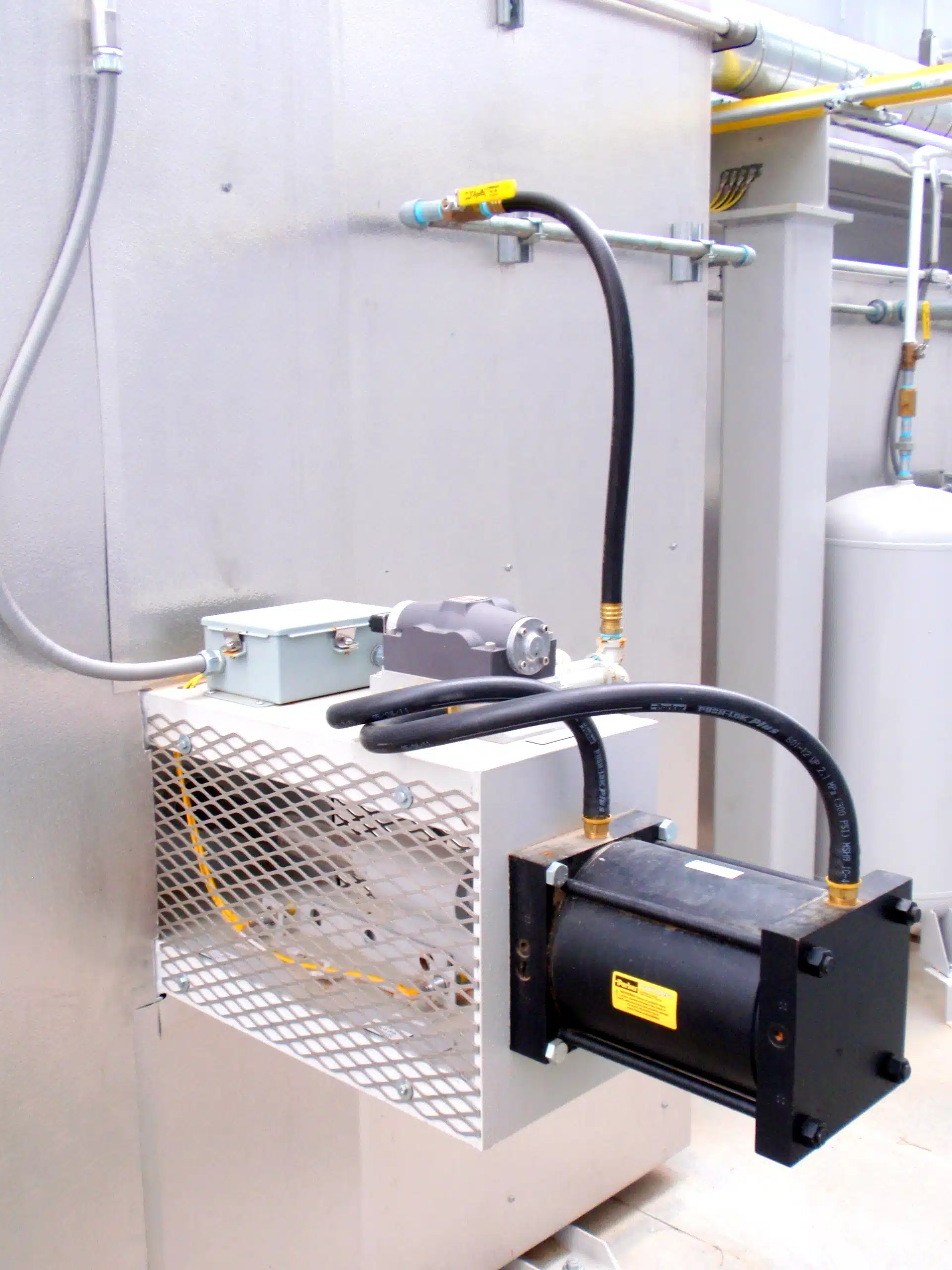
TANN poppet valve controls and piping used to direct airflow in an RTO system
Industries That Use RTO Systems
Regenerative thermal oxidizers are used across a wide range of industries where VOC emissions, solvent-laden exhaust, or process air contaminants must be destroyed efficiently and reliably.
- Automotive Manufacturing
- Aerospace
- Can Manufacturing
- Coatings & Converting
- Printing & Graphic Arts
- Packaging Products
- Paint & Finishing Operations
- Paper & Film Processing
- Wood Products & Finishing
- Petroleum & Chemical Processing
- Pharmaceutical Manufacturing
- Food & Rendering
- Wastewater & Odor Control
- Filtration Systems
- Asphalt Production
- Engine Test Stands
- Ethanol Production
- Semiconductor Manufacturing
RTO Cost Considerations
RTO cost varies significantly based on airflow, VOC concentration, thermal efficiency requirements, installation scope, and system configuration. Understanding these factors early in the project helps establish realistic budgets and identify opportunities to reduce long-term operating costs.
Airflow Requirements
Higher airflow applications require larger media beds, larger valves, larger fans, and more structural steel, making airflow one of the biggest drivers of system cost.
VOC Loading
VOC concentration influences burner sizing, fuel consumption, and overall costs. Higher VOC loading may allow the system to operate with lower fuel.
System Configuration
Two-chamber, three-chamber, multi-chamber, and capture systems each offer different performance characteristics, thermal efficiencies, and capital costs.
Thermal Efficiency
Higher thermal efficiency can reduce fuel consumption significantly over the life of the system, often making it an important long-term consideration.
Controls & Integration
Plant integration, remote access, data logging, and custom control requirements can influence project scope and overall cost.
Installation Requirements
Foundations, crane planning, ductwork, electrical work, gas piping, startup support, and plant shutdown coordination all contribute to total installed cost.
Looking for budget ranges and project pricing information? Review our Thermal Oxidizer Cost Guide for a detailed breakdown of the factors that influence total project cost.
What We Need to Quote Your Regenerative Thermal Oxidizer
Getting an accurate proposal starts with a handful of process details. Providing this information up front helps us move quickly and set realistic expectations on both cost and lead time.
Information We Need to Get Started
- Volumetric flow rate (SCFM or ACFM)
- Inlet air temperature
- VOC composition and concentration, ideally by compound in ppm or lbs/hr
- Required operating hours per day and days per year
- Required destruction/removal efficiency
- Project location (used for altitude and site condition corrections)
If you don't have every figure yet, that's fine. We can work from preliminary or rough numbers to put together a budgetary estimate and refine the design as your project develops. Stack height requirements and material-of-construction preferences are also helpful if you already know them.
Frequently Asked Questions About RTO Systems
Additional Resources
How RTO Systems Work
Explore the regenerative heat exchange cycle, airflow reversal process, and core operating principles of RTO systems.
Learn More →What Is an RTO?
Learn the fundamentals of regenerative thermal oxidizer technology and why it is widely used in industrial emissions control.
Learn More →RTO Maintenance and Service
Learn more about inspection, maintenance, troubleshooting, and repair support for long-term oxidizer performance.
Learn More →RTO Upgrades and Retrofits
Explore upgrade options for controls, performance improvements, modernization, and system life extension.
Learn More →Talk to an Engineer About Your Regenerative Thermal Oxidizer (RTO) Project
Our engineering team can assist with system sizing, system upgrades, troubleshooting, and new oxidizer installations. Whether you are evaluating a new regenerative thermal oxidizer or improving an existing system, TANN can help review your application and recommend the right path forward.