
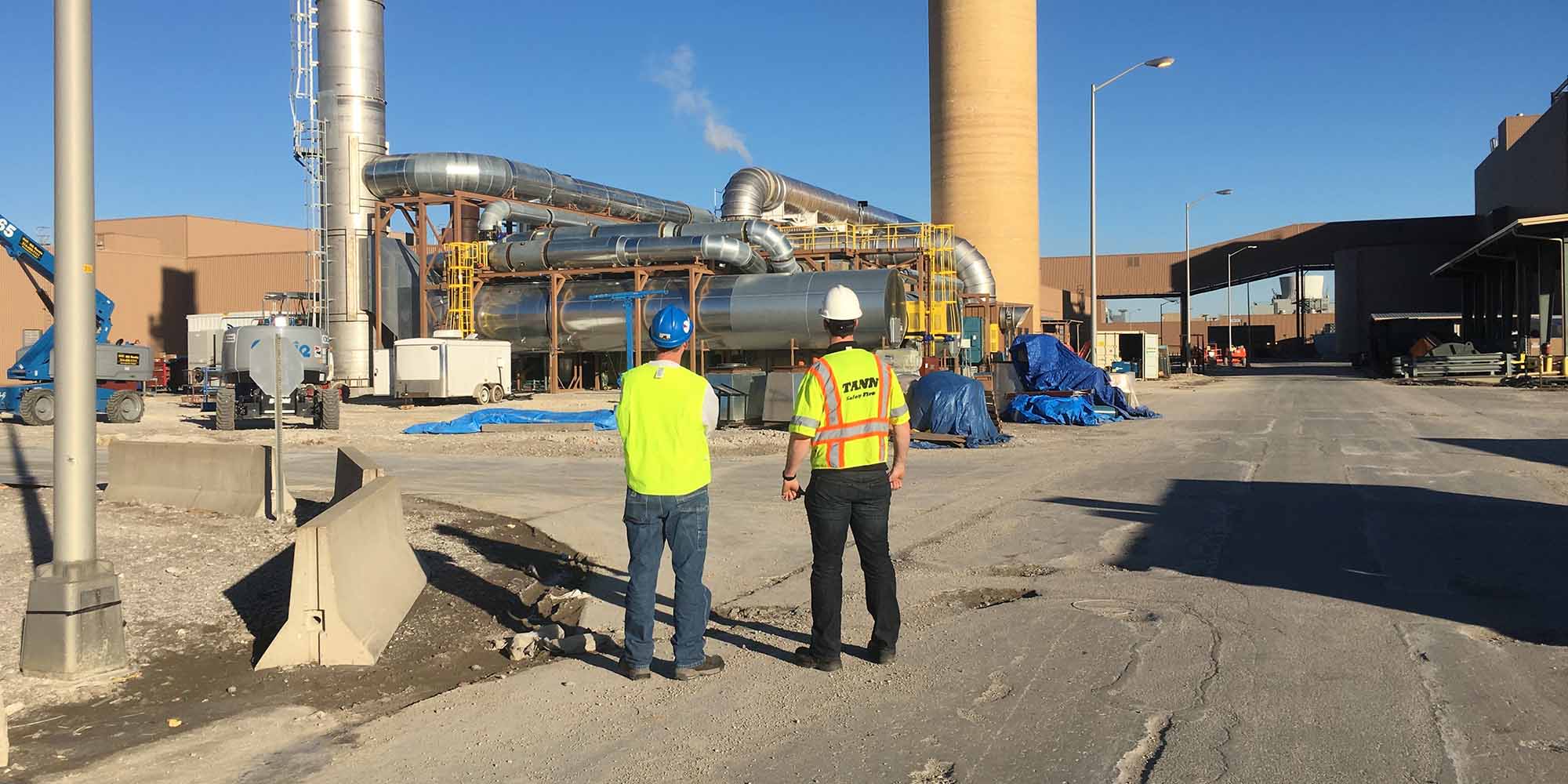
VOCs are carbon-based chemicals that readily evaporate and significantly affect air quality, worker health, and regulatory compliance. For manufacturers, understanding VOCs—what they are, where they originate, and how to control them—directly impacts uptime, permits, and community trust.
Moreover, effective VOC management isn’t one tactic; it’s a mix of source reduction, measurement, and proven end-of-pipe controls that can destroy 95–99%+ of emissions while recovering energy where feasible.
What Are VOCs?
Definition in practice: VOCs are organic compounds with high vapor pressure/low boiling point that volatilize at ambient conditions, migrating from liquids/solids into air.
Regulatory lens: Agencies define VOCs with differing criteria (e.g., vapor pressure/reactivity exclusions). Industrial VOC families include:
- Alcohols and ketones: isopropanol, MEK.
- Aromatics: toluene, xylene.
- Aldehydes and ethers.
- Chlorinated solvents (application-specific handling).
Why VOC chemistry matters: Reactivity drives ozone and secondary aerosol formation, influencing both compliance limits and the required destruction/removal technologies.
Common Sources of VOCs
Manufacturing hotspots:
- Paints/coatings and curing ovens: atomization + thermal off-gas create continuous streams.
- Chemical processing: reactor vents, distillation, storage tank breathing losses.
- Pharmaceuticals: solvent coating, cleaning, synthesis.
- Printing/packaging: solvent inks, laminating adhesives.
- Food processing and rendering: odorous organics, high moisture.
- Electronics/semiconductors: cleaning/degreasing and process solvents.
Key takeaway: High-flow, variable-concentration sources favor regenerative thermal oxidizers (RTOs) for efficiency and reliability; low-ppm, valuable solvent streams may favor adsorption/recovery.
Health Effects of VOC Exposure
Acute effects: Irritation (eyes/nose/throat), headaches, dizziness, respiratory distress—often during maintenance or upset events.
Chronic effects: Liver/kidney/CNS impacts; some VOCs (e.g., benzene) are carcinogenic. Sensitive groups (pregnant individuals, children, asthmatics) face elevated risk.
Practical control implication: Continuous monitoring + ventilation + proven destruction technologies reduce exposure risk and regulatory liability.
Environmental Impact of VOCs
Ozone and smog formation: VOCs react with NOx under sunlight to form ground-level ozone, degrading regional air quality.
Climate and transport: Certain VOCs influence greenhouse forcing and can travel long distances, impacting ecosystems far from source.
Bottom line: Comprehensive VOC control improves regional air quality, reduces odor complaints, and strengthens community relations.
VOC Regulations and Compliance
U.S. framework: NESHAP/MACT and state rules (often stricter in non-attainment areas) commonly require ≥95% destruction efficiency or outlet limits in ppm, with annual stack tests and continuous monitoring.
Global context: EU and other jurisdictions enforce solvent emission directives and Best Available Techniques (BAT)—pushing facilities toward high-efficiency, well-documented solutions.
Compliance reality: Permits demand verified performance, documented operating conditions, and auditable records across the lifecycle.
VOC Control Methods and Technologies
Thermal oxidation (industry standard):
- RTOs (Regenerative Thermal Oxidizers): 95–97% thermal efficiency via ceramic media; ≥99% destruction efficiency with proper design/operation; ideal for 10,000–100,000+ SCFM.
- Recuperative thermal oxidizers: ~40–80% thermal efficiency with shell-and-tube/plate exchangers; suited to medium flows or batch duty.
- Direct-fired units: simplest, no heat recovery; best for low hours/low flow scenarios.
Catalytic oxidation: 600–700°F operating range with precious-metal catalysts; lower fuel use on clean streams; watch for catalyst poisoning (sulfur/metals/PM).
Adsorption and recovery: Activated carbon or synthetic media for low-ppm or solvent recovery cases; desorption (steam/thermal) captures value and reduces waste.
Biological treatment: Biofilters/biotrickling filters for biodegradable VOCs/odors (food/wastewater sectors); requires stable conditions and longer residence.
Source reduction (always first): Low-VOC materials, closed transfer, leak detection/repair, optimized cure profiles, and equipment upgrades reduce the load at its origin.
Actionable summary: Match control to stream: high-flow/variable → RTO; low-ppm/valuable → adsorption; clean/steady/low-temp → catalytic; intermittent/low-flow → direct-fired; biodegradable/odorous → bio-treatment.
VOC Measurement and Monitoring
Compliance testing: EPA Method 25A (FID) for total VOC; Method 18 (GC/MS) for speciated compounds.
Continuous monitoring (CEMS): FID/PID/IR analyzers with data logging and alarms for optimization and documentation.
Workplace monitoring: Direct-reading PID meters, colorimetric tubes, GC during maintenance/confined space work.
Best practice: Integrate CEMS + periodic stack tests + IH monitoring to maintain compliance and fine-tune controls.
Industry-Specific VOC Challenges
Automotive paint lines: 30,000–100,000 SCFM with variable solvent loads—RTOs excel with high uptime and energy recovery.
Chemical processing: Diverse, sometimes corrosive streams—materials selection, halogen handling, and multi-train solutions are common.
Pharma: Validation-heavy environments—tight documentation and high-efficiency destruction at controlled temps.
Food/Rendering: High moisture/particulate—requires robust pre-treatment and fouling-resistant designs plus odor control.
Printing/Packaging: Continuous operation—reliable RTOs with energy integration to offset oven/makeup-air loads.
Putting It All Together
A practical VOC strategy stacks five layers:
- Eliminate/Reduce at the source: low-VOC chemistries, closed systems.
- Capture effectively: hoods, ducts, balanced airflow.
- Destroy or recover efficiently: select RTO/catalytic/adsorption/biological based on stream.
- Measure continuously: verify with CEMS and scheduled testing.
- Document and maintain: SOPs, PM, calibration, and training.
Core takeaway: Modern RTOs can deliver ≥99% destruction with 95–97% thermal efficiency, cutting fuel costs and emissions while meeting tough permits.
Final Thoughts
VOCs are manageable when you pair source reduction with the right control technology and real monitoring. With a sound strategy—often anchored by RTOs for high-flow industrial streams—facilities consistently meet permits, improve air quality, and even recover energy along the way. For complex, mixed, or sensitive applications, collaborative design and validation ensure reliable, life-cycle-optimized performance.
TANN Corporation’s engineers have been designing regenerative thermal oxidizer systems for 40+ years, serving manufacturers across every industry with VOC compliance requirements. Our engineering team evaluates each application individually, recommending system configurations optimized for specific exhaust characteristics and compliance obligations. From initial assessment through installation and decades of ongoing support, we deliver complete emission control solutions. Contact us today for a free quote or to learn more.