
Thermal Oxidizer Comparison Guide
Compare regenerative thermal oxidizers, regenerative catalytic oxidizers, recuperative thermal oxidizers, and direct-fired oxidizers to better understand which technology may be best suited for your application, emissions profile, operating requirements, and long-term cost goals.
Understanding Thermal Oxidizer Technologies
There is no single thermal oxidizer technology that is best for every application. The right system depends on airflow volume, VOC concentration, operating schedule, exhaust stream characteristics, energy goals, maintenance expectations, and project budget.
Thermal oxidizers are used to destroy combustible air pollutants such as VOCs, HAPs, odors, smoke, and carbon monoxide by exposing the exhaust stream to controlled oxidation conditions. While the purpose is similar across oxidizer technologies, each design handles heat recovery, operating temperature, fuel usage, and maintenance differently.
This guide compares four common industrial oxidizer technologies: regenerative thermal oxidizers (RTOs), regenerative catalytic oxidizers (RCOs), recuperative thermal oxidizers, and direct-fired oxidizers. For catalytic applications, TANN typically focuses on regenerative catalytic oxidizer technology, which combines regenerative heat recovery with catalyst-assisted oxidation.

Thermal Oxidizer Comparison Table
The table below provides a general comparison of common thermal oxidizer technologies. Final system selection should always be based on actual process conditions, emissions data, compliance requirements, and operating goals.
| Comparison Factor | Regenerative Thermal Oxidizer (RTO) | Regenerative Catalytic Oxidizer (RCO) | Recuperative Thermal Oxidizer | Direct-Fired Oxidizer |
|---|---|---|---|---|
| Best Fit | High airflow applications where very high VOC destruction efficiency and long-term fuel efficiency are important | Applications suitable for catalyst where very high destruction efficiency, lower operating temperature, and excellent energy performance are priorities | Applications needing direct heat recovery, stable operation, and a simpler heat exchanger-based design | Applications where simple direct combustion is preferred or heat recovery is not required |
| Destruction Efficiency | Up to 99%+ destruction efficiency through advanced valve design, optimized flow control, and multi-chamber regenerative heat recovery. | Excellent when catalyst compatibility and system design are properly matched to the application | High when properly engineered and operated | High when properly engineered and operated |
| Heat Recovery | Excellent regenerative heat recovery using ceramic media | Excellent regenerative heat recovery using ceramic media, combined with catalyst-assisted oxidation | Good heat recovery using a metal heat exchanger | Typically limited or no integral heat recovery |
| Operating Temperature | Higher operating temperature than catalytic systems | Lower operating temperature than a traditional RTO because the catalyst promotes oxidation | Higher operating temperature than catalytic systems | Higher operating temperature with direct combustion |
| Fuel Consumption | Often low for suitable high-airflow applications due to regenerative heat recovery | Often very low when the application is catalyst-compatible because it combines regenerative heat recovery with lower oxidation temperatures | Moderate depending on heat recovery, VOC loading, and exchanger efficiency | Often higher because more supplemental fuel may be required |
| Capital Cost | Often higher due to media beds, valves, and system complexity | Often higher due to regenerative design plus catalyst requirements | Moderate depending on exchanger design and materials | Often lower due to simpler system design |
| Maintenance Focus | Media condition, valve sealing, pressure drop, burner performance, and airflow balance | Media condition, catalyst activity, catalyst contamination, pressure drop, and temperature control | Heat exchanger condition, burner performance, and materials of construction | Burner system, combustion chamber, airflow, and controls |
| Key Limitation | Higher upfront investment and more complex mechanical design | Catalyst compatibility must be carefully evaluated before selection | Heat exchanger limitations with certain corrosive or fouling streams | Higher fuel usage when heat recovery is not included |
Destruction Efficiency Note: RTO and RCO systems are both capable of very high VOC destruction efficiency when properly designed and operated. RCO systems add catalyst technology to a regenerative platform, allowing oxidation to occur at lower temperatures when the process stream is compatible with the catalyst.
Types Of Thermal Oxidizers
Each oxidizer technology has strengths and tradeoffs. The best choice depends on what the system needs to accomplish over the life of the equipment.

Regenerative Thermal Oxidizer (RTO)
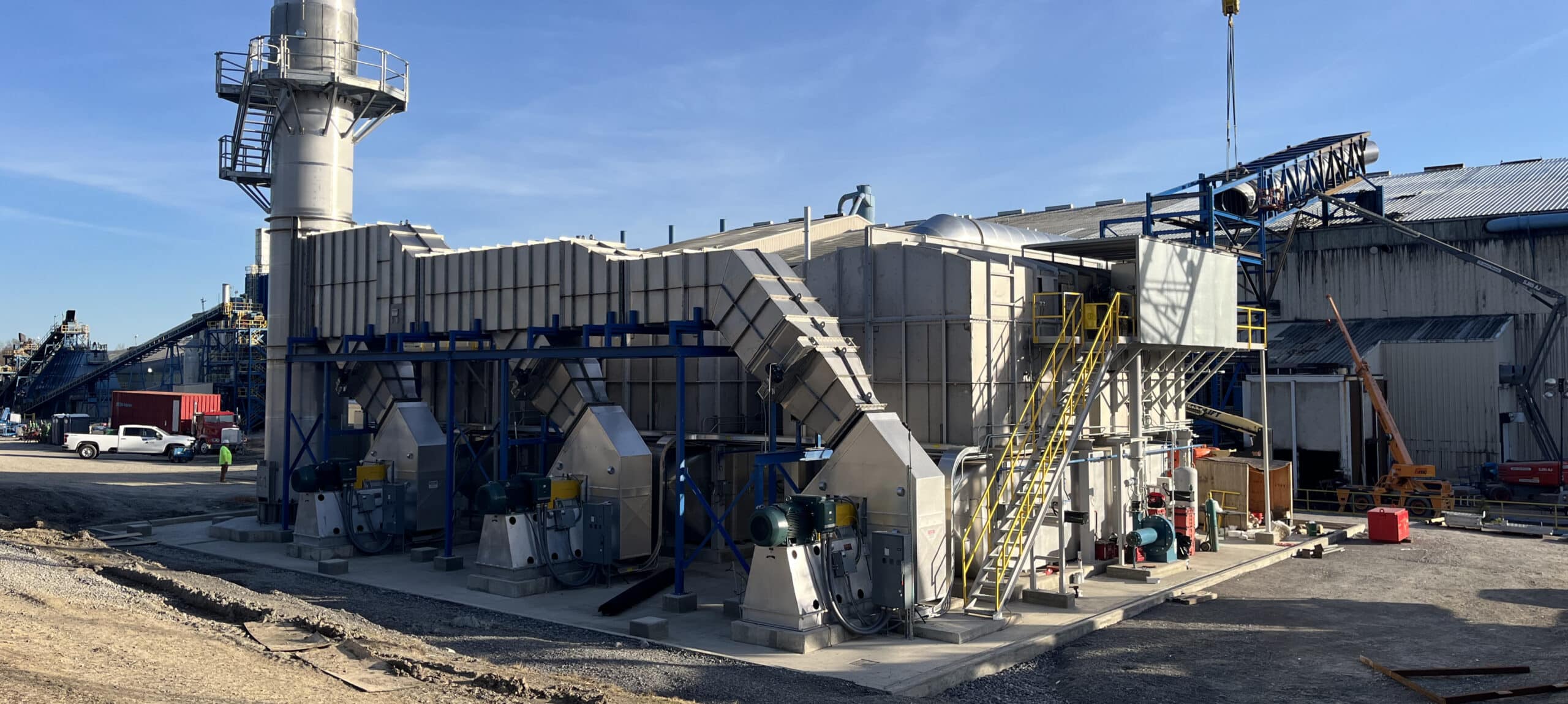
Regenerative thermal oxidizers use ceramic heat exchange media to capture heat from the outgoing clean air stream and transfer it to the incoming contaminated air stream. RTO systems are commonly selected for high-airflow industrial applications where very high VOC destruction efficiency, reliable compliance, and long-term fuel efficiency are major priorities.
An RTO may require a higher upfront investment than simpler oxidizer designs, but the long-term operating savings can make it the preferred option when airflow is high and operating hours are significant.
Regenerative Catalytic Oxidizer (RCO)
A regenerative catalytic oxidizer combines regenerative heat recovery with catalyst-assisted oxidation. In simple terms, an RCO operates similarly to an RTO from a heat recovery standpoint, but uses a catalyst to promote oxidation at lower operating temperatures.
This can make an RCO a strong option for applications that are compatible with catalyst technology and where very high destruction efficiency, reduced fuel consumption, and long-term energy performance are key project goals.

Recuperative Thermal Oxidizer
Recuperative thermal oxidizers use a metal heat exchanger to recover heat from the clean exhaust stream and preheat incoming process air. These systems can provide a practical balance of heat recovery, system simplicity, and reliability for applications with stable process conditions.
A recuperative oxidizer may be a strong fit when direct heat recovery is beneficial, airflow is moderate, or the application is better suited for metal heat exchanger construction than ceramic media beds.

Direct-Fired Thermal Oxidizer
Direct-fired thermal oxidizers treat emissions through direct combustion without relying on a separate heat recovery system. They are often the simplest oxidizer design and may have a lower initial equipment cost than more complex heat recovery systems.
Because direct-fired systems typically do not recover heat the same way regenerative or recuperative systems do, they can have higher operating costs when supplemental fuel demand is high.
Capital Cost vs. Operating Cost
Thermal oxidizer selection should account for both initial purchase price and long-term operating cost. A lower-cost system may be more expensive over time if it consumes significantly more fuel or requires more frequent maintenance.
Capital Cost Comparison
Direct-fired oxidizers are often the simplest and lowest-cost option from an equipment standpoint. Recuperative systems typically fall into the middle depending on exchanger design, materials of construction, and system complexity.
RTO and RCO systems often carry a higher initial cost because of regenerative heat recovery design, ceramic media beds, valve systems, and overall mechanical complexity. RCO systems also include catalyst-related design considerations.
Operating Cost Comparison
Operating cost is where oxidizer technologies can differ significantly. Fuel consumption, pressure drop, fan energy, maintenance requirements, media condition, catalyst condition, and uptime all affect total cost of ownership.
RTOs are often selected when long-term fuel efficiency is a major priority. RCOs can reduce fuel demand even further in catalyst-compatible applications because oxidation can occur at lower operating temperatures. Direct-fired systems often have higher fuel use when heat recovery is not included.
Which Thermal Oxidizer Is Right For Your Application?
The right oxidizer depends on the real operating conditions of your process, not just the equipment category.
Airflow & VOC Loading
High airflow, low-to-moderate concentration applications often point toward regenerative heat recovery. Higher VOC loading may change the energy balance and influence whether RTO, RCO, recuperative, or direct-fired oxidation is the better fit.
Catalyst Compatibility
For RCO applications, the process stream must be evaluated for catalyst compatibility. Certain compounds, particulates, or contaminants may affect catalyst performance, which is why application review is critical before selecting a catalytic system.
Compliance & Ownership Goals
Permit requirements, destruction efficiency, testing needs, uptime expectations, fuel costs, service access, and future production changes should all be considered before selecting a system.
The Best Oxidizer Is The One Designed Around Your Process
A thermal oxidizer comparison can help narrow the options, but the final decision should be based on actual process data and long-term operational goals. Airflow, pollutant concentration, production schedule, exhaust characteristics, catalyst compatibility, and compliance requirements all impact system design.
The lowest-cost system is not always the lowest-cost solution over time. Likewise, the highest-efficiency technology is not automatically the best fit for every application. The right system is the one that delivers dependable compliance, reliable operation, manageable maintenance, and the best total cost of ownership for your facility.
Frequently Asked Questions Thermal Oxidizers
Need help comparing thermal oxidizer technologies?
Every application is different. Flow rate, VOC concentration, process conditions, operating schedule, and regulatory requirements all impact system selection. Our team works directly with manufacturers to evaluate requirements and determine which oxidizer technology best fits the application.