
Regenerative Thermal Oxidizers for Aerospace
A regenerative thermal oxidizer for aerospace manufacturing has to handle exhaust at a scale few other industries match, often paired with concentrators to manage airflow into the hundreds of thousands of standard cubic feet per minute. It also has to meet customer-driven specifications that go well beyond typical industrial requirements, from material documentation to project schedule. TANN designs RTO systems for both sides of that challenge.
Why Aerospace Demands More From a Regenerative Thermal Oxidizer
Aerospace coating and finishing operations generate exhaust that's high in volume but low in VOC concentration, the kind of profile that calls for a concentrator ahead of the oxidizer. In this industry, that combination can scale up dramatically, with some installations built around airflow requirements as high as 300,000 scfm. A regenerative thermal oxidizer for aerospace has to be sized and engineered for that scale from the outset.
Airflow isn't the only thing that sets this application apart. Aerospace customers commonly attach detailed specifications to their equipment requirements, sometimes down to documenting where a component's raw material, such as steel, was sourced and processed. Site logistics tend to be more tightly coordinated as well, and project schedules generally leave less room for slippage than in other industrial applications.
None of that is unfamiliar territory for TANN. Our engineers and project managers already work closely with every job site and oversee materials as a standard part of how we build equipment, regardless of industry. Aerospace simply asks for that same level of attention in a more formal, documented way, which is why it fits naturally into how TANN already operates rather than requiring a different way of doing business.
Filtration is also a defining piece of this application, and it's directly addressed by EPA's National Emission Standards for aerospace manufacturing and rework facilities, which govern hazardous air pollutant emissions from coating operations across this industry. A regenerative thermal oxidizer for aerospace needs to be designed with that regulatory backdrop in mind, not just the exhaust volume.
What Makes Aerospace a Demanding RTO Application
A regenerative thermal oxidizer for aerospace has to satisfy conditions that go beyond typical industrial requirements:
- High-volume, low-concentration exhaust, often requiring a concentrator ahead of the oxidizer to manage flow
- Airflow requirements that can scale up to 300,000 scfm on large installations
- Detailed, customer-driven equipment specifications, including material documentation requirements
- Tighter site logistics coordination and less schedule flexibility than many other industries
Built for What This Application Demands
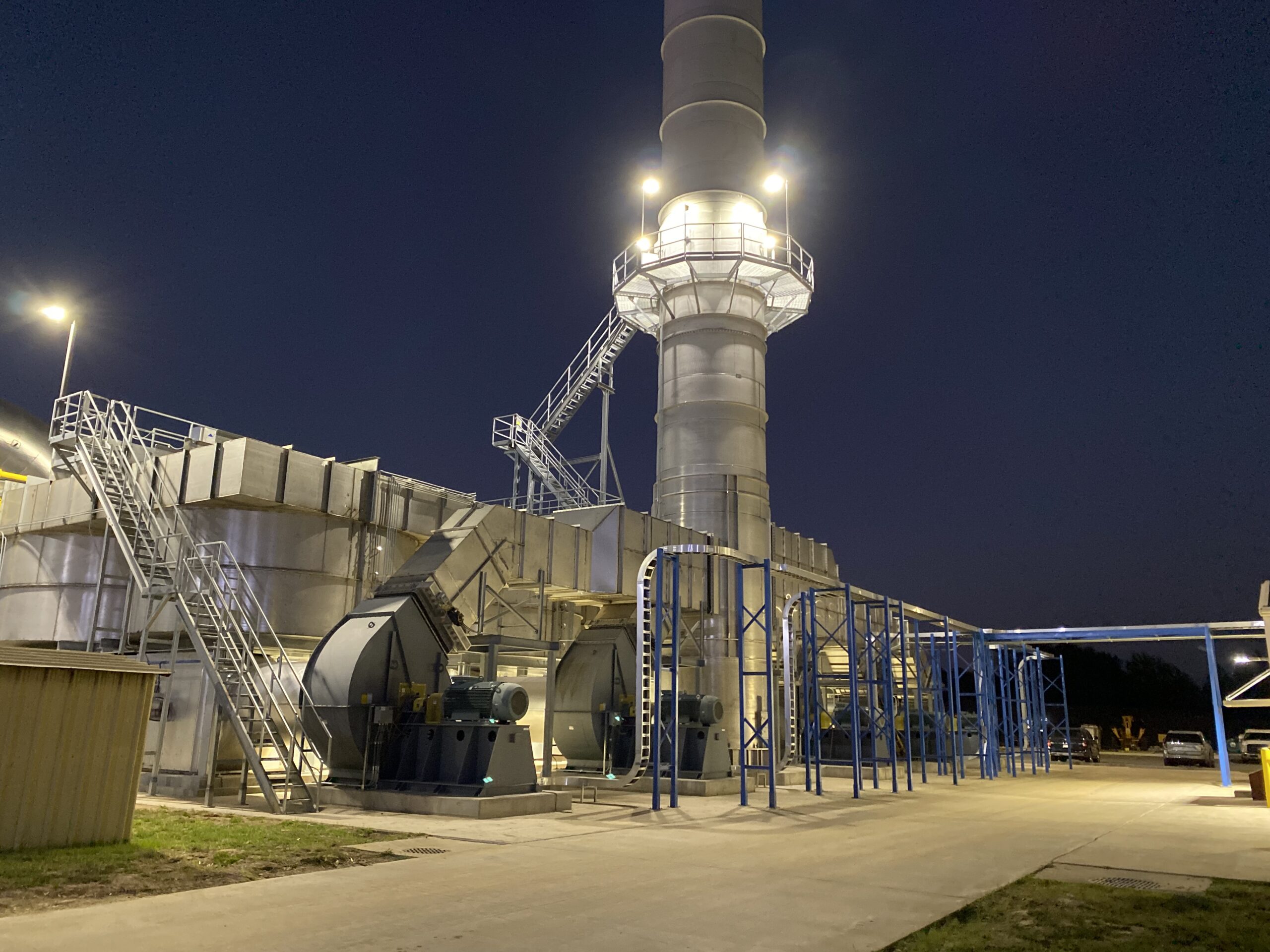
TANN engineers and fabricates regenerative thermal oxidizer systems in-house at our Kaukauna, Wisconsin facility. Aerospace projects add a layer of documentation and schedule discipline on top of the equipment engineering itself.
Concentrators for High-Volume, Low-Concentration Exhaust
Where exhaust volume is high and VOC concentration is low, a concentrator paired with the RTO reduces the volume the oxidizer has to handle. That's what lets the overall system scale to the very large airflow requirements common in aerospace facilities, without the RTO carrying the full load alone.
Documentation and Material Traceability
Aerospace customers often require documented traceability on equipment materials, right down to where a component's steel was sourced and processed. TANN's engineers and project managers already oversee materials and stay closely engaged with the site on every project, so meeting that standard here is nothing new.
Schedule-Driven Project Execution
Aerospace projects typically run on tighter schedules and more tightly coordinated site logistics than other industrial installations. TANN's project managers work directly with the site throughout, the same close coordination we bring to any job, just applied to a schedule with less room for error.
In aerospace, the RTO itself is only part of what gets evaluated. Documentation, schedule reliability, and the ability to scale to very large airflow requirements are just as much a part of the equation as destruction efficiency.
What Aerospace RTOs Are Up Against
Understanding the pressures on a regenerative thermal oxidizer for aerospace helps facilities and project teams evaluate whether a proposed system, or an existing one, is actually built for this application's scale and documentation demands.
Extremely High Airflow Volumes
Aerospace coating and finishing operations can generate exhaust volumes far beyond typical industrial applications, with some installations requiring airflow capacity as high as 300,000 scfm. Systems not designed with this scale in mind will struggle to keep up.
Concentrator and RTO Sizing Balance
Concentrators reduce the volume reaching the oxidizer, but the two have to be sized and controlled together. A mismatch between concentrator output and RTO capacity shows up as pressure drop issues or inconsistent destruction efficiency.
Material and Documentation Compliance
Aerospace customers frequently require documented material traceability and other specification compliance that goes well beyond standard industrial equipment procurement. Missing or incomplete documentation can hold up a project regardless of how well the equipment itself performs.
Site Logistics Constraints
Aerospace facility sites often come with tighter logistics coordination requirements for equipment delivery and installation than typical industrial sites, which has to be planned for well before equipment arrives.
Schedule Pressure
Aerospace project schedules generally leave less room for delay than other industrial applications. Fabrication and delivery timelines need to be reliable, not just achievable in a best-case scenario.
Combustion System Drift
As with any continuously operating oxidizer, combustion components and control parameters can drift over time. Temperature deviations affect destruction efficiency, fuel consumption, and compliance reporting regardless of the process being served.
TANN Supports Your System for the Long Term
A regenerative thermal oxidizer for aerospace is a significant capital investment tied to demanding project timelines and documentation requirements. TANN supports that investment from initial engineering through installation, startup, and the full operating life of the system.
Engineering and Fabrication
Every TANN RTO is engineered and fabricated in-house at our Kaukauna, Wisconsin facility, with material documentation and traceability records maintained to meet aerospace customer specifications.
Installation and Startup
TANN provides installation support, commissioning, and operator training, coordinated around the tighter site logistics and schedule requirements common on aerospace projects.
Annual Inspections
Scheduled inspections evaluate concentrator performance, media condition, combustion health, and controls integrity before issues affect destruction efficiency or compliance standing.
Concentrator and Media Service
TANN supports concentrator maintenance and media replacement, keeping the sizing balance between concentrator and RTO intact as the system ages.
Documentation and Compliance Support
TANN maintains equipment records and documentation to support ongoing aerospace customer specification and regulatory compliance needs.
24/7 Emergency Response
TANN's service team is available around the clock. When an unplanned issue affects your emissions control system, our team can troubleshoot remotely and mobilize qualified technicians to your facility when you need them most.
Warning Signs an Aerospace RTO Needs Attention
In an application built around scale and strict compliance, warning signs are worth catching early, both for equipment performance and for documentation standing.
Performance Indicators
- Rising pressure drop across the oxidizer media beds
- Increasing fuel consumption without a corresponding change in production volume
- Reduced destruction efficiency or approaching permit compliance thresholds
- Fan or concentrator performance no longer matching the system's original airflow rating
Operational Observations
- Increased frequency of alarms, valve faults, or combustion system trips
- Documentation or compliance records that haven't been updated alongside equipment changes
- Site logistics or access issues that weren't a factor when the system was first installed
- Any system that has not had a documented inspection in more than 12 months
Ready to discuss your aerospace facility's emissions control requirements?
Whether you're evaluating a regenerative thermal oxidizer for aerospace on a large-scale project, working through concentrator sizing and airflow requirements, or navigating tight schedules and documentation demands, TANN is ready to help. Our engineering team works directly with your project requirements to design a system that fits your scale, your specs, and your timeline.