
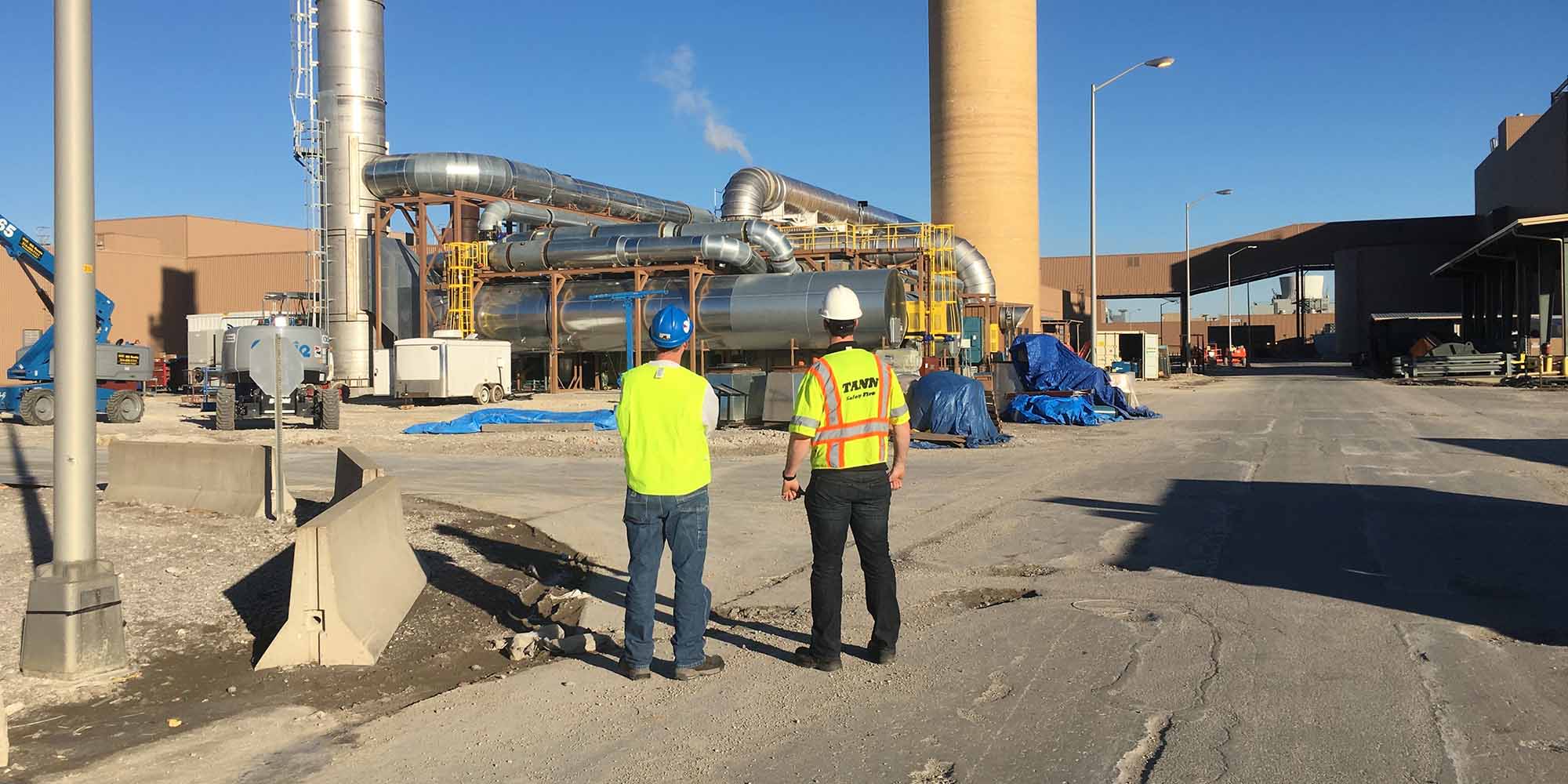
Petrochemical regenerative thermal oxidizer systems address one of the toughest emission control challenges in industrial manufacturing. Petrochemical facilities include refineries, chemical plants, and processing operations that convert petroleum feedstocks into downstream products. These operations generate exhaust streams loaded with volatile organic compounds (VOCs). Hazardous air pollutants (HAPs) like benzene, toluene, and xylene are also common. Feedstock composition and process conditions shift throughout production. Because of this, the exhaust these facilities produce varies constantly in volume, concentration, and chemical makeup.
That variability puts real pressure on emission control equipment. A regenerative thermal oxidizer (RTO) is built to handle exactly this kind of variable, high-VOC exhaust stream. Through a ceramic media heat exchange process, an RTO destroys VOCs and HAPs at destruction efficiencies up to 99%. It also recovers most of the heat generated during oxidation. Plant engineers and EHS managers evaluating emission control options need more than a generic overview of oxidizer technology. Understanding how a petrochemical regenerative thermal oxidizer performs under demanding, variable conditions matters just as much. Below, we walk through the specific emission challenges petrochemical facilities face. We also cover how we engineer RTOs to meet them, and what regulatory and design factors shape a system specification.
Why Petrochemical Emissions Require Specialized Oxidation
Petrochemical processing generates exhaust unlike most other industrial applications. Petrochemical exhaust streams often contain a shifting mix of VOCs, HAPs, and other organic compounds rather than a single consistent pollutant. Refineries process crude oil through catalytic cracking, catalytic reforming, and sulfur recovery units. Each of these process units produces its own distinct emission profile. Storage tanks, loading racks, and wastewater systems add further variability. Equipment leaks add still more to the exhaust stream an oxidizer must handle.
This variability creates two distinct engineering challenges. First, VOC concentration can fluctuate significantly across a production cycle. An oxidizer needs enough thermal mass and control flexibility to maintain destruction efficiency even as loading changes. Second, many petrochemical HAPs carry known health risks. Benzene, toluene, ethylbenzene, and xylene are common examples found in refinery and chemical processing exhaust. These health risks make VOC destruction efficiency a compliance requirement rather than simply an efficiency target. Facilities that underestimate this variability often specify oxidizers that perform well under average conditions but struggle during peak loading events.
Common Petrochemical Emission Sources
Several distinct process areas within a typical petrochemical facility contribute to the exhaust stream an oxidizer needs to manage:
- Process vents: Catalytic cracking, reforming, and other conversion units release VOCs and HAPs continuously during normal operation.
- Storage vessels: Crude oil, intermediate products, and finished petrochemical products off-gas VOCs as tank levels and temperatures change.
- Equipment leaks: Valves, pumps, and connectors throughout a facility contribute fugitive emissions that add to the overall VOC load.
- Wastewater systems: Process water carrying dissolved organics releases VOCs as it moves through treatment and separation stages.
- Loading and marine operations: Gasoline and product loading racks release concentrated VOC bursts during transfer operations.
Petrochemical exhaust can also carry particulate matter, corrosive compounds, or trace contaminants depending on which process unit feeds the oxidizer. Because of this, materials selection and pre-treatment considerations become part of the conversation early. They enter the design process at the earliest stages. They aren’t an afterthought addressed once equipment is already specified. When we evaluate a petrochemical application, we look closely at feedstock variability and HAP content. We also assess any corrosive or particulate-laden streams before recommending a configuration. That evaluation shapes decisions about media selection and valve design. It also informs combustion chamber sizing well before a system reaches the shop floor.
How a Petrochemical Regenerative Thermal Oxidizer Works
A petrochemical regenerative thermal oxidizer uses the same core technology found in RTOs across other industries. We adapt the design to handle the volume and variability petrochemical exhaust presents. Contaminated process air enters the system and passes through a bed of ceramic heat exchange media. This media has stored heat from a previous cycle. The stored heat preheats the incoming air before it reaches the combustion chamber, where temperatures of approximately 1,500 degrees Fahrenheit destroy VOCs and HAPs through thermal oxidation.
This oxidation step is where the real performance numbers show up. Regenerative thermal oxidizers can achieve destruction efficiencies of up to 99%. They accomplish this while recovering the majority of the heat generated during combustion. After passing through the combustion chamber, the now-clean exhaust flows out through a second ceramic media bed. This transfers heat to that bed for use in the next cycle. This regenerative heat exchange is what allows RTOs to operate with significantly lower fuel consumption than direct-fired alternatives once the system reaches self-sustaining operation.
Continuous or near-continuous operation is standard across most petrochemical facilities. Emission control equipment needs to match that operating pattern. System uptime above 99% is achievable with properly maintained RTO equipment, even under demanding petrochemical duty cycles. Unplanned downtime on an oxidizer can force a broader process shutdown if the facility can’t legally vent unabated exhaust. Because of this, reliability considerations carry as much weight as destruction efficiency when petrochemical clients evaluate oxidizer options.
Capacity and Configuration for Petrochemical Applications
Petrochemical facilities range from small specialty chemical operations to large-scale refineries, and RTO capacity needs to match that range. Standard RTO systems handle 5,000 to 80,000 SCFM. Larger custom configurations are available up to 400,000 SCFM for major refinery applications. Facilities with especially high or fluctuating VOC loading sometimes benefit from a three-chamber configuration. The purge cycle in a three-chamber design captures VOC-laden air that would otherwise escape during valve transitions in a two-chamber unit. This translates to higher destruction efficiency rather than higher thermal efficiency. That distinction matters for facilities weighing configuration options against compliance targets.
Because petrochemical exhaust can include corrosive compounds, ceramic media selection matters too. Structured media offers a smaller footprint and a lower overall weight. Random-packed media works well for most applications that include particulate. We evaluate each petrochemical application’s specific exhaust characteristics before recommending a media type. VOC concentrations, airflow volumes, and any corrosive components all factor into that recommendation, since a system suited to that facility’s actual operating conditions performs better than one built to generic assumptions.
Media replacement scheduling also looks different in a petrochemical setting than it does in many other industries we serve. Structured media typically needs replacement every five to ten years, while random saddle media can last fifteen to twenty years depending on exhaust characteristics. Facilities running corrosive or particulate-heavy streams often see media degrade faster than the general timeline suggests. Because of this, we recommend tracking media condition against actual operating data rather than relying on a calendar schedule alone. This approach helps petrochemical clients plan replacement budgets and outages around real equipment condition instead of guesswork.
EPA Compliance for Petrochemical Facilities
Petrochemical facilities operate under some of the most detailed federal air emission rules of any industrial sector. The EPA regulates petroleum refineries through National Emission Standards for Hazardous Air Pollutants, commonly called Refinery MACT. This rule sets limits on HAP emissions from process vents, storage vessels, wastewater systems, and equipment leaks. These standards apply maximum achievable control technology requirements. Facilities must demonstrate their emission control equipment performs at a level consistent with the best-performing sources in the industry.
Meeting these standards starts with the right equipment choice. A properly specified regenerative thermal oxidizer can help petrochemical facilities meet destruction efficiency requirements under Refinery MACT and related NESHAP standards. Beyond HAP-specific rules, many petrochemical facilities also fall under New Source Performance Standards addressing VOC emissions from equipment leaks and wastewater systems. Because these regulations frequently overlap, a facility might need to demonstrate compliance with several distinct standards from a single piece of emission control equipment. State environmental agencies often layer additional permitting requirements on top of federal rules as well, particularly through Title V operating permits for major sources.
Compliance testing and ongoing monitoring play a significant role in petrochemical operations. This holds true more so than in many other industries we serve. Facilities typically need to verify destruction efficiency through periodic stack testing. Some facilities also need continuous emissions monitoring depending on their permit conditions. Working with an oxidizer manufacturer that understands both the equipment and the compliance documentation a facility needs can simplify an otherwise complex regulatory relationship. We support compliance testing and documentation alongside system design. Petrochemical clients often need both pieces working together. Equipment specification and compliance verification rarely function well as separate, disconnected projects.
Specifying a Regenerative Thermal Oxidizer for Petrochemical Applications
Specifying an RTO for a petrochemical facility starts with a detailed understanding of the exhaust stream itself. Before recommending a configuration, our engineers evaluate application-specific exhaust characteristics. VOC concentrations, airflow volumes, and particulate loading all factor into that evaluation. We avoid applying a standard configuration across different facility types. Petrochemical exhaust rarely behaves like a textbook example. Specification decisions need to reflect actual operating conditions rather than average industry figures.
Several factors shape a petrochemical regenerative thermal oxidizer specification beyond basic capacity. Feedstock variability affects how much thermal mass and control flexibility the system needs. HAP content affects destruction efficiency targets. In some cases, HAP content also determines whether a two-chamber or three-chamber configuration makes more sense. Corrosive or particulate-laden streams affect materials selection and media type as well. Facilities that work through these factors during the design phase typically avoid costly reconfiguration after installation.
Long-term operating costs also deserve attention during specification, and our regenerative thermal oxidizer cost guide covers this in more depth. A system properly sized for a facility’s actual VOC loading tends to perform more efficiently. An oversized safety margin usually costs more to operate over time. Properly sized systems also require less supplemental fuel over their operational lifespan. RTO systems typically operate reliably for 20 to 30 years. Specification decisions made early in the process affect performance and maintenance requirements for decades to come. When we design a petrochemical regenerative thermal oxidizer, we build in the flexibility to handle feedstock changes and production shifts a facility may see across that operational lifespan. Our engineers evaluate that long-range picture rather than a single snapshot from commissioning day.
Petrochemical facilities also tend to expand or reconfigure production lines more frequently than some other industries we serve. A new process unit, a feedstock change, or a capacity expansion can shift the exhaust profile beyond what an existing oxidizer’s original design assumed. Building some capacity headroom into the original specification, without oversizing the system unnecessarily, gives a facility room to adapt as production evolves. We discuss these growth plans directly with petrochemical clients during the specification phase, since a system designed only for current conditions can become a bottleneck once a facility scales up.
Our engineering studies play an important role for petrochemical clients considering a new or replacement system. A detailed engineering study before equipment specification helps identify feedstock variability and compliance requirements that a standard proposal might miss. This upfront analysis typically pays for itself by avoiding change orders or performance shortfalls after installation. We treat this evaluation stage as a genuine engineering exercise rather than a sales formality, since petrochemical exhaust conditions vary enough between facilities that assumptions carried over from a different project rarely hold up.
Final Thoughts
A petrochemical regenerative thermal oxidizer engineered around a facility’s actual feedstock variability, HAP content, and airflow characteristics performs where generic configurations fall short. Petrochemical exhaust doesn’t behave like exhaust from most other industrial processes. Emission control equipment built for average conditions struggles to keep pace with it. Compliance in this sector depends on equipment that matches real operating conditions. A specification sheet alone doesn’t guarantee that match.
If your facility is evaluating emission control options for a petrochemical process, the exhaust characteristics unique to your operation deserve a closer look before any equipment gets specified. Our engineers work directly with petrochemical clients to map exhaust variability against system design from the earliest planning stages. That conversation often clarifies configuration questions long before a formal proposal takes shape.
TANN Corporation has designed and manufactured regenerative thermal oxidizer systems for 40+ years, serving manufacturers across every industry with VOC compliance requirements. Our engineering team evaluates each application individually, recommending system configurations optimized for specific exhaust characteristics and compliance obligations. From initial assessment through installation and decades of ongoing support, we deliver complete emission control solutions. Contact us today for a free quote or to learn more.