
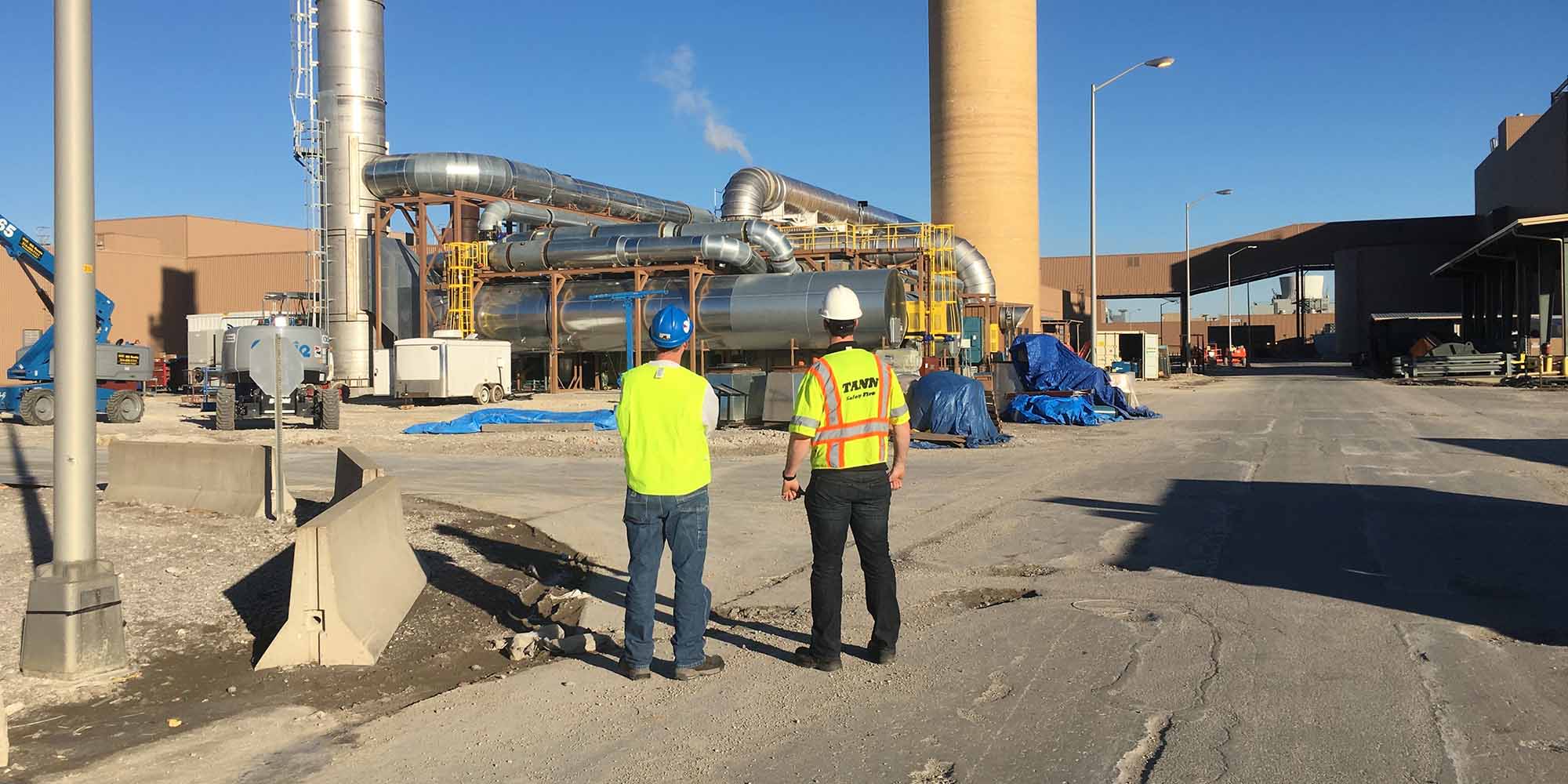
Regenerative thermal oxidizer cost is one of the first questions every facility asks when evaluating air pollution control equipment. The answer depends on several interdependent factors that go well beyond a single price tag. Airflow capacity, system configuration, materials of construction, and custom engineering requirements all influence the capital investment. Operating costs then compound over a 20 to 30 year equipment lifespan. In many cases, those cumulative expenses exceed the original purchase price many times over.
Understanding these cost drivers before you request quotes puts you in a stronger position to evaluate proposals and make a sound investment decision. The total cost of owning a regenerative thermal oxidizer includes far more than the purchase price, and the decisions you make during the specification phase determine your cost trajectory for decades. This guide breaks down every major cost factor so you can budget accurately and compare options on an equal basis. Whether you’re purchasing your first system or replacing aging equipment, the principles are the same.
Capital Cost Factors for Regenerative Thermal Oxidizer Systems
The upfront purchase price of a regenerative thermal oxidizer depends on several design variables, each driven by your specific application requirements. No two systems are priced identically because no two applications present the same combination of exhaust chemistry, airflow volume, and site conditions.
Airflow Capacity and System Size
Airflow capacity is the single largest driver of regenerative thermal oxidizer cost. Standard systems handle exhaust volumes from 5,000 to 80,000 SCFM. Large installations accommodate up to 400,000 SCFM for major industrial facilities. As system capacity increases, cost efficiency generally improves because many fixed engineering and manufacturing expenses spread across a larger unit. However, each step up in capacity requires proportionally more steel, ceramic media, and structural support. The right approach sizes the system to your actual exhaust profile with appropriate margin for future production growth.
Configuration, Materials, and Custom Engineering
Beyond capacity, several design decisions affect the capital cost significantly. Two-chamber systems require less material and simpler valve arrangements than three-chamber configurations. Three-chamber designs achieve higher destruction efficiency because the purge cycle captures unprocessed air (VOC-laden air) that would otherwise escape during valve transitions. The added performance comes with a higher price, but for applications requiring maximum destruction efficiency, it’s a necessary investment.
Materials of construction vary with exhaust chemistry. Standard carbon steel works for clean solvent streams. Corrosive or halogenated compounds, many of which are classified as hazardous air pollutants (HAPs), require upgraded alloys that increase both material and fabrication costs. For a detailed look at how these engineering decisions interact, see our regenerative thermal oxidizer design guide.
Custom engineering is where cost and performance intersect most directly. Every regenerative thermal oxidizer we build is designed for a specific application. A system custom-engineered for your exhaust characteristics, space constraints, and compliance requirements costs more than a generic catalog unit. However, it performs to specification from day one and avoids the costly modifications that poorly matched systems require. We’ve built systems for facilities with tight footprints, unusual structural requirements, and complex ductwork routing. With 40+ years of special project experience, our engineers know how to design around real-world site constraints without compromising performance. Our engineering studies service can scope your project and provide a detailed cost projection before you commit.
Operating Cost and the Fuel Efficiency Advantage
Capital cost is a one-time investment. Operating costs recur every month for 20 to 30 years. Over the full lifespan of the equipment, cumulative operating costs typically dwarf the initial purchase price, which makes thermal efficiency the most important economic factor in any regenerative thermal oxidizer cost analysis. Fuel consumption is the single largest ongoing expense. Because regenerative thermal oxidizer systems recover 95% to 97% of their combustion heat through ceramic media beds, they consume far less fuel than other oxidizer types. Recuperative and direct-fired alternatives at equivalent airflow require significantly more supplemental fuel. A recuperative system at 70% heat recovery requires roughly six times more supplemental fuel than a regenerative system at 95% thermal efficiency. Our thermal oxidizer cost guide compares capital and operating cost profiles across every oxidizer technology we build.
When VOC concentrations in the exhaust stream are high enough, the heat released during oxidation exceeds what the system needs to maintain temperature. At that point, the burner shuts off and the system operates self-sustaining with zero fuel input. Many printing, coating, and manufacturing operations reach this threshold during normal production. Self-sustaining operation eliminates fuel cost entirely during production hours, which fundamentally changes the economics for facilities with consistent solvent loading. For a complete breakdown of each operating cost category, see our guide to RTO operating costs and total cost of ownership.
Electricity for the system fan adds to the monthly operating budget. Periodic ceramic media replacement, valve maintenance, and controls upkeep round out the picture. Each of these costs is predictable and manageable with proper planning. Our RTO efficiency guide covers how self-sustaining operation and energy recovery directly reduce these expenses. Facilities that track their operating costs from the beginning can identify efficiency trends early and address them before they become expensive problems. Proactive tracking turns raw data into actionable maintenance decisions.
Regenerative Thermal Oxidizer Cost Over the Full Lifespan
The only accurate way to compare regenerative thermal oxidizer cost across manufacturers and configurations is through total cost of ownership. Purchase price comparisons without operating cost projections are incomplete and often misleading. A system that saves $50,000 on the purchase order but burns more fuel every year can easily cost more over its operating life than the higher-priced alternative.
How Efficiency Compounds Over Decades
A properly maintained regenerative thermal oxidizer operates reliably for 20 to 30 years. Over that span, even small differences in thermal efficiency translate into significant fuel cost differences. A system with 2% lower thermal efficiency doesn’t cost 2% more to operate; it costs substantially more because that efficiency gap compounds across every operating hour for the equipment’s entire service life. Facilities running continuous production schedules feel this difference most acutely. They accumulate more operating hours per year, which amplifies the impact of any efficiency shortfall. For a facility operating 8,000 hours annually over 25 years, that’s 200,000 operating hours where efficiency determines fuel consumption.
Installation and Maintenance Costs
Installation costs also factor into the total investment. Site preparation, ductwork fabrication and routing, mechanical and electrical connections, and commissioning all add to the project cost. Preassembled skid-mounted systems can reduce installation costs by shifting assembly work to a controlled manufacturing environment. However, every installation is different. Site-specific conditions such as available footprint, roof load capacity, access for rigging, and distance from emission sources all affect the final project cost. Facilities with constrained spaces or unusual site conditions should expect higher installation costs. A manufacturer with special project experience can often find solutions that keep those costs in check.
Maintenance costs follow a predictable pattern when facilities invest in preventive programs. Structured ceramic media typically requires replacement every 5 to 10 years. Random saddle media can last 15 to 20 years depending on the application. An annual valve inspection to verify proper operation catches issues before they affect compliance or efficiency. Facilities that implement disciplined preventive maintenance programs routinely achieve 99%+ uptime and maintain thermal efficiencies above 95% throughout the equipment’s service life. Without that discipline, thermal efficiency erodes gradually, and the system’s total cost of ownership increases year after year. Our ceramic media services support this maintenance cycle for any make or model system.
Evaluating and Comparing Regenerative Thermal Oxidizer Quotes
When you’ve received proposals from multiple manufacturers, comparing them accurately requires looking beyond the bottom-line price. Two quotes at different price points may represent very different levels of engineering, materials, and long-term support. A structured comparison framework helps you see those differences clearly.
Performance, Materials, and Support
Start with the performance guarantees. Destruction removal efficiency (DRE) and thermal efficiency should be specified and guaranteed, not estimated. Comparing regenerative thermal oxidizer quotes on guaranteed performance specifications rather than price alone reveals which system will actually cost less over its full operating life. A lower-priced system with 93% thermal efficiency will consume more fuel every year than a higher-priced system at 97%. That difference compounds over decades of continuous operation.
Materials of construction matter for longevity. Ask what grade of steel, refractory, and ceramic media each proposal includes. Controls capability affects both daily reliability and future upgrade paths. Warranty terms and aftermarket service availability determine what happens when something needs attention at 2 a.m. on a holiday weekend. A manufacturer with 24/7 service capability and on-site response within 24 hours provides support that factors directly into your total cost of ownership.
Manufacturer Experience and Special Project Capability
Manufacturer experience deserves serious evaluation. A company with 40+ years of design, manufacturing, and field service history has encountered and solved problems that newer entrants haven’t seen yet. Experienced manufacturers who have completed hundreds of installations across diverse industries bring practical knowledge that reduces project risk and avoids costly surprises. We’ve designed and installed systems for automotive paint finishing, pharmaceutical manufacturing, chemical processing, printing, packaging, and dozens of other sectors. Each one required application-specific engineering.
That accumulated knowledge is especially valuable on special projects. We’ve built systems for facilities with tight footprints, unusual structural requirements, complex ductwork routing, and non-standard installation conditions. When a project presents challenges that a standard design can’t accommodate, 40+ years of field experience is what separates a successful installation from a costly correction.
Our engineering studies service provides the application data you need to normalize competing proposals. Ask for an engineering study before you finalize your manufacturer selection. The EPA’s Air Pollution Control Cost Manual also provides independent reference data for thermal oxidizer cost estimation. Compliance with the Clean Air Act is a non-negotiable requirement, and understanding the regulatory framework helps you evaluate what level of system performance your facility actually needs.
Reducing Costs Through Efficiency and Maintenance
Several strategies help minimize regenerative thermal oxidizer cost at every phase of ownership. The first and most impactful is proper specification. A system sized correctly for your exhaust profile avoids both the compliance risk of undersizing and the wasted capital of oversizing. Getting the specification right eliminates the most expensive cost driver: a system that doesn’t match the application. This is why we recommend an engineering study before finalizing any purchase decision.
Protecting Your Investment Over Time
Once the system is operating, preventive maintenance protects your investment. Regular media inspections, valve maintenance, burner calibration, and controls verification keep the system running at its designed efficiency. Every percentage point of thermal efficiency that preventive maintenance preserves translates directly into lower fuel costs for the remaining life of the equipment. Skipping scheduled maintenance to save money in the short term almost always costs more in fuel and repairs over the following years. The math is straightforward: small investments in maintenance protect large investments in equipment. Our field service team responds within 24 hours and works on any make or model oxidizer.
For aging systems, targeted upgrades can restore performance without the cost of full replacement. PLC upgrades bring modern monitoring and automation to systems whose mechanical components still have years of useful life. These upgrades often pay for themselves through improved reliability and reduced unplanned downtime. Burner control upgrades improve combustion efficiency on systems with obsolete burner management. When the cost analysis favors a more comprehensive approach, full refurbishment restores the system to like-new performance at a fraction of new equipment cost. A well-executed refurbishment extends system life by 10 to 15 additional years, making it one of the highest-ROI decisions available for aging oxidizer equipment. Our thermal oxidizer refurbishment program covers structural components, refractory, media, valves, and controls as a complete package.
Final Thoughts
The real regenerative thermal oxidizer cost isn’t the number on the purchase order. It’s the total investment across 20 to 30 years of compliance, fuel consumption, maintenance, and operational reliability. Every decision made during specification shapes that total for the equipment’s entire service life. Capacity sizing, materials selection, system configuration, and manufacturer choice all interact to determine what you’ll spend over the next two to three decades.
The most cost-effective path starts with complete exhaust data and a manufacturer who will tell you what the application actually requires rather than quoting the cheapest option. Too many buyers learn this lesson after purchasing a system that doesn’t fit. Bring us your exhaust chemistry, airflow data, and permit requirements. We’ll provide a detailed cost projection based on your specific application, with no assumptions and no shortcuts.
TANN Corporation has 40+ years of experience with regenerative thermal oxidizers, serving manufacturers across every industry with VOC compliance requirements. Our engineering team evaluates each application individually, recommending system configurations optimized for specific exhaust characteristics and compliance obligations. From initial assessment through installation and decades of ongoing support, we deliver complete emission control solutions. Contact us today for a free quote or to learn more.